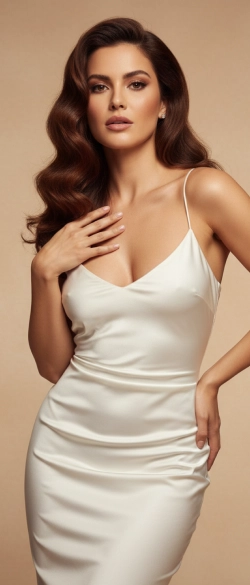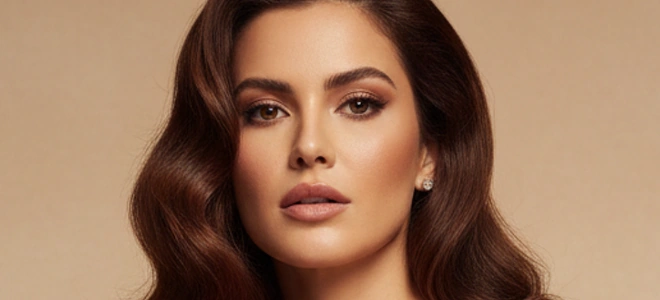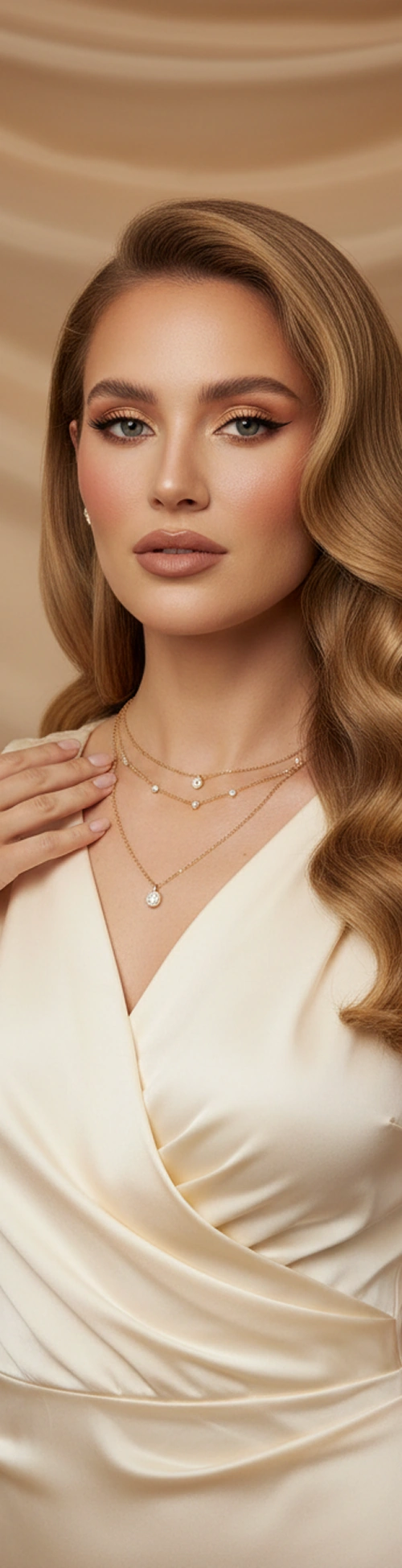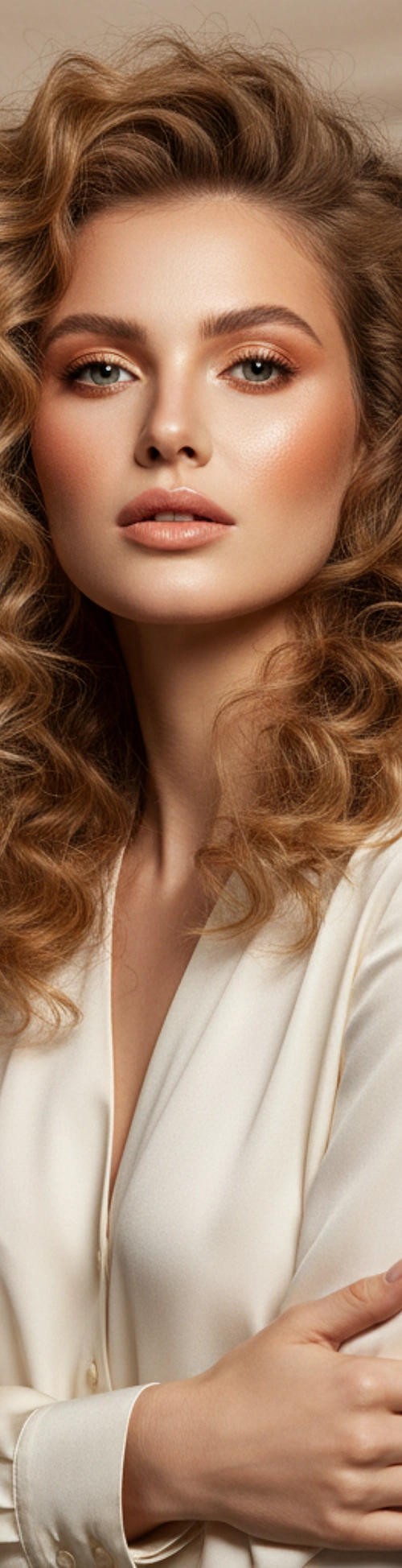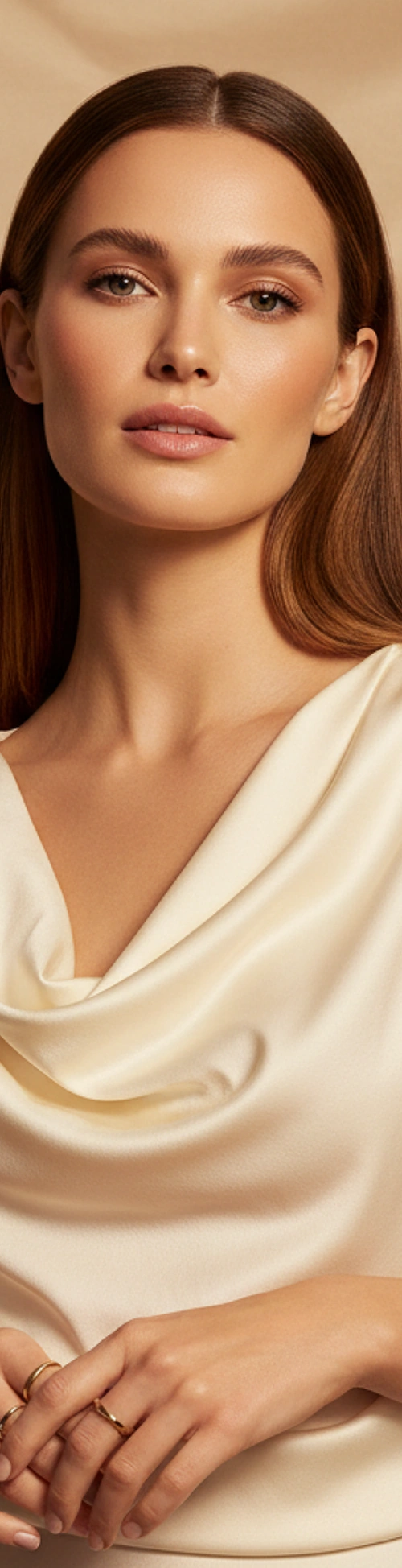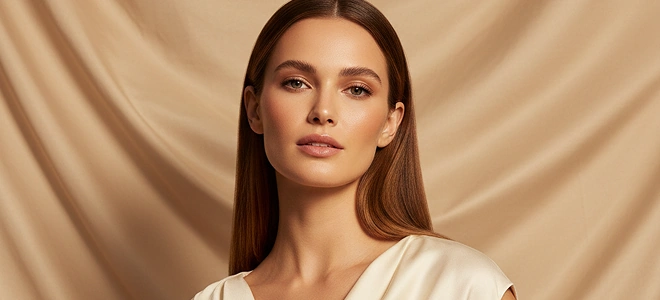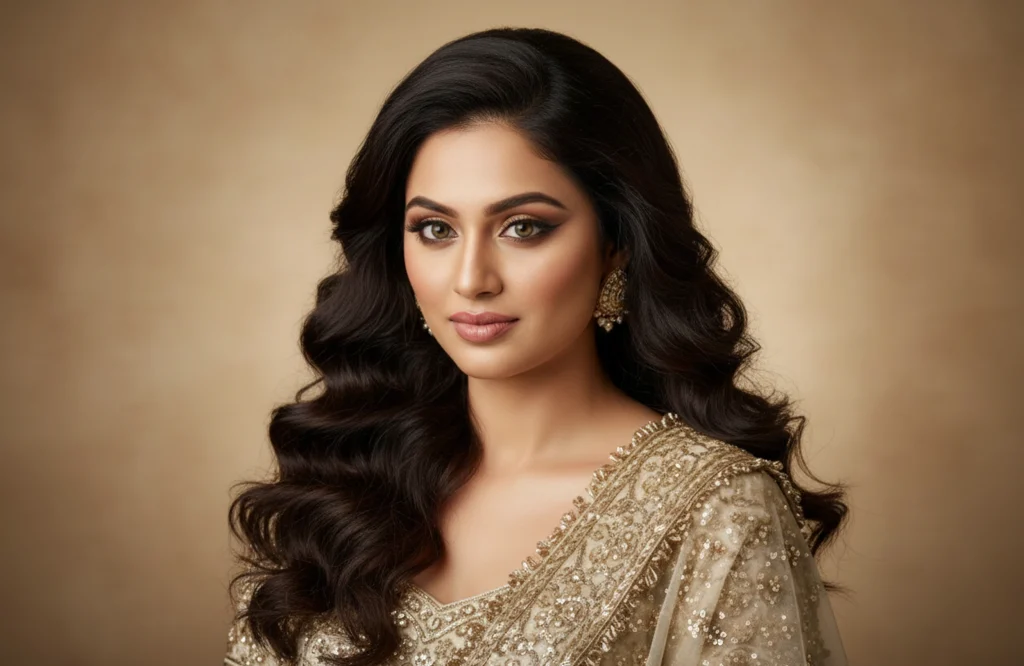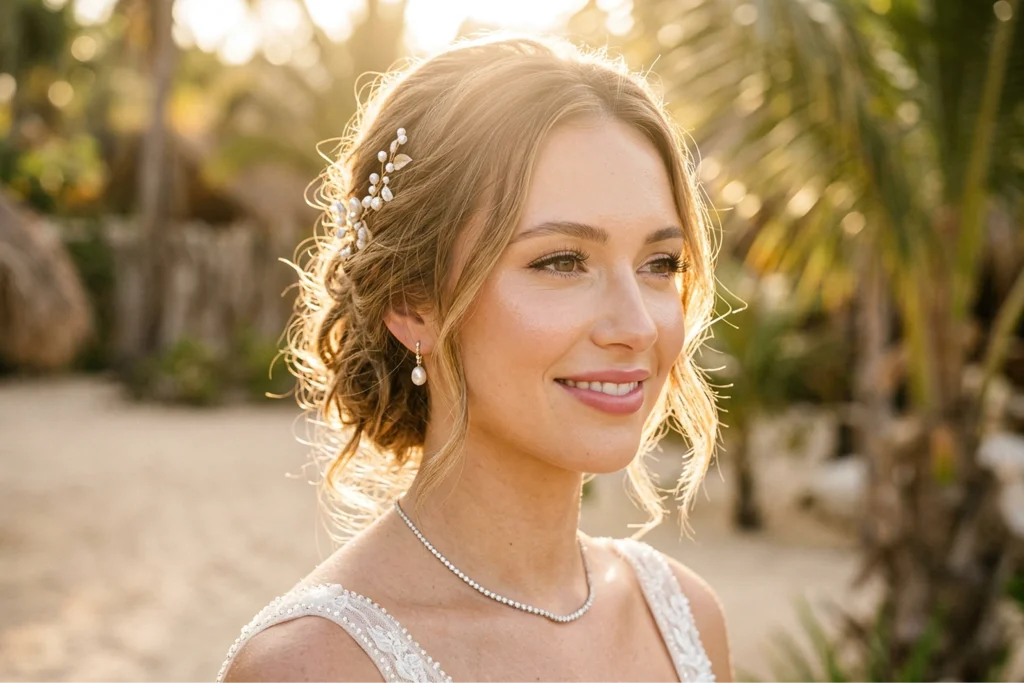
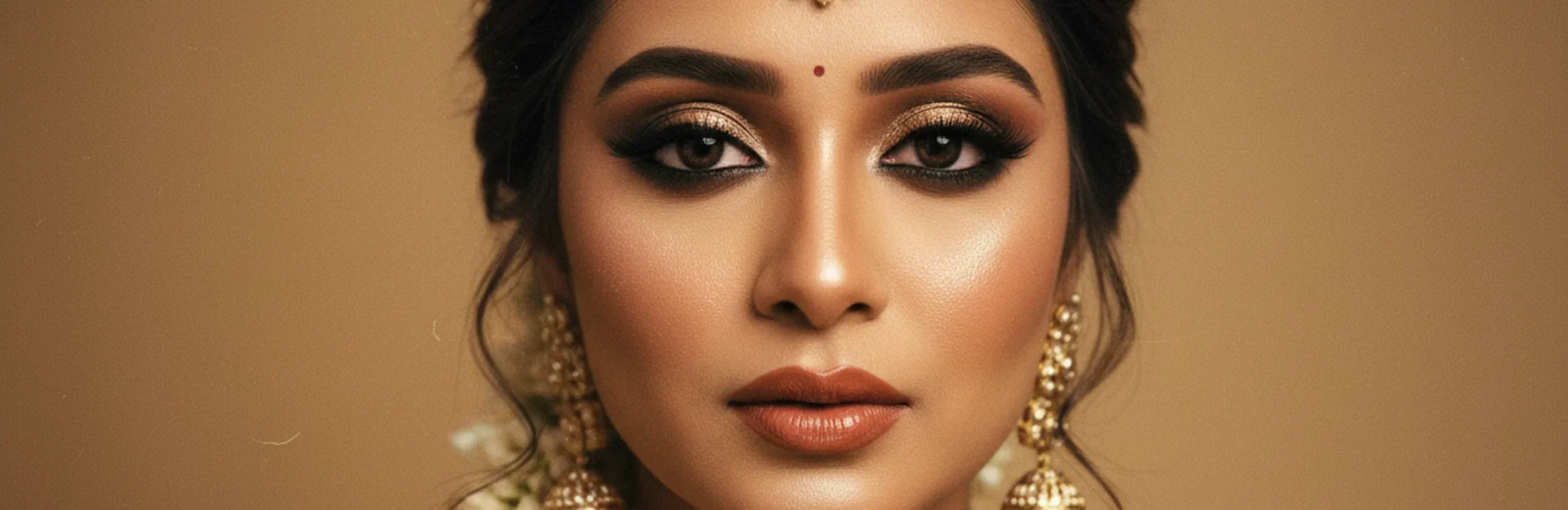
Mehndi night has its own energy — looser, warmer and more intimate than the ceremony. It’s the one pre-wedding event where the pressure drops a little, the family gathers and the whole thing has a genuinely celebratory feeling. And because of all that, it photographs differently too. The lighting is usually warmer, the setting more relaxed, the vibe less formal. Your makeup and hair need to match that — not compete with it.
This guide is about getting your mehndi look right: what works on camera, what to avoid, how to balance the glam with the occasion and how to make sure you look like yourself — just the best version of yourself — in every photo from that night.
Most brides think about mehndi night as a warm-up for the main event. And in some ways it is — but that framing can lead to an undercooked look that reads flat in photos or an overdone one that clashes with the relaxed mood of the evening. Mehndi calls for its own intentional brief, not just a lighter version of your ceremony look.
A few things that make mehndi night photography different from ceremony photography:
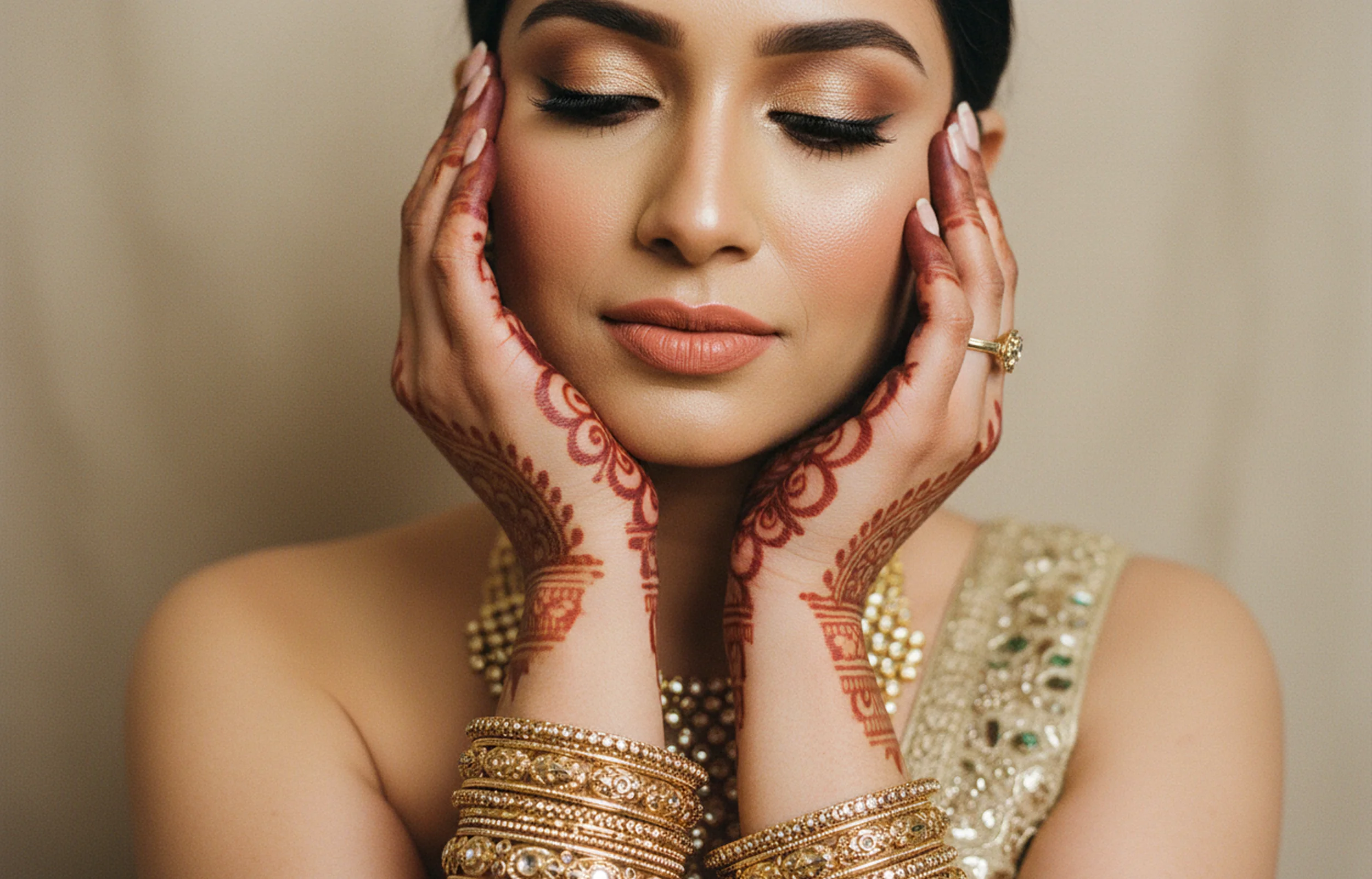
The best mehndi night looks share a few common qualities: warmth, glow, definition without heaviness and a lip that photographs cleanly without demanding all the attention. Here are the directions we work with most often for this event.
The foundation of a great mehndi look — literally. A luminous, skin-like base with a warm finish photographs beautifully under golden and candlelit settings. Full coverage is still important — you’ll be in photos for five hours — but the finish should be dewy rather than matte. We build this with a lightweight but buildable foundation, a liquid highlighter blended into the cheekbones and a setting spray rather than heavy powder.
What to avoid: a flat, full-matte base that reads dull under warm lighting. Mehndi photography rewards skin that has life in it.
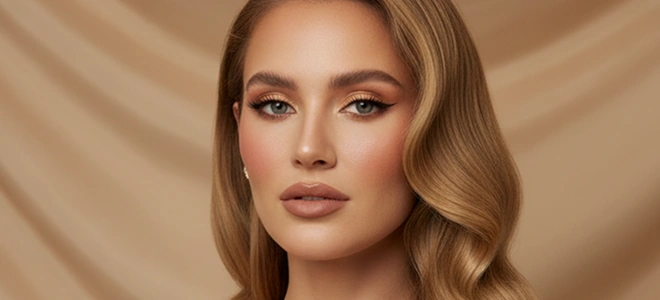
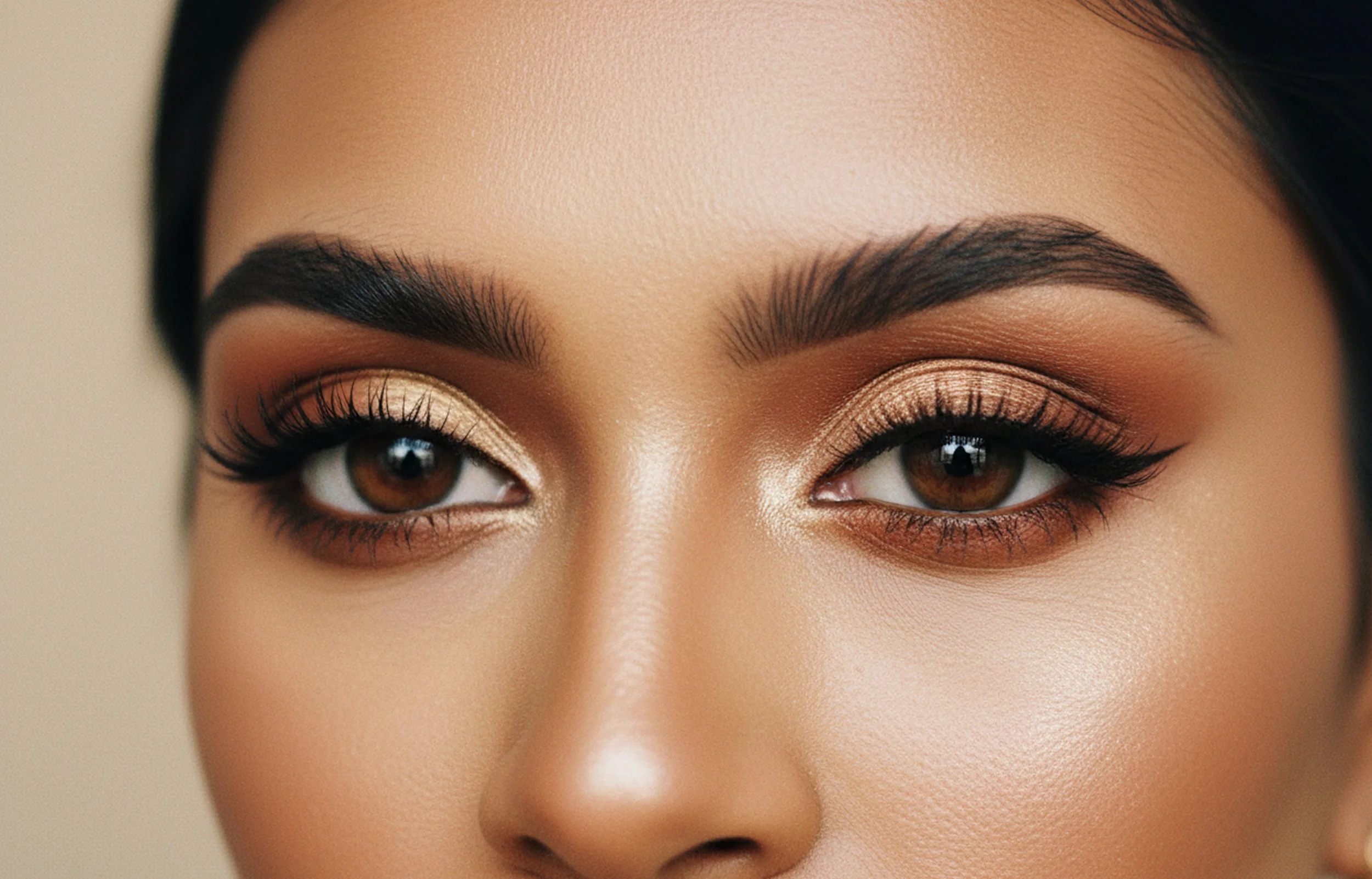
Warm-toned eye looks — bronzes, terracottas, burnt oranges — are among the most consistently flattering for mehndi night across skin tones. They add definition and warmth without the drama of a full smoky eye, and they photograph cleanly in natural and artificial light. For deeper skin tones, a rich bronze with a gold lid and a dark brown crease reads beautifully. For medium tones, terracotta with a champagne highlight on the inner corner is a reliable combination.
What to avoid: cool-toned greys and purples that fight with the warm lighting and the jewel tones in most mehndi outfits.
A mehndi night lip is not your ceremony lip. Ceremony looks can carry a bold red or deep berry — they’re designed for a specific visual impact. Mehndi calls for something softer. The goal is a lip that photographs cleanly without becoming the dominant feature of every photo.
What tends to work:
What to think twice about: a very bold red or dark berry at mehndi. It can work — but it pushes the look into ceremony territory and tends to read as overdressed for the occasion. If you love a bold lip and it’s your thing, go for it. Just know it shifts the whole register.
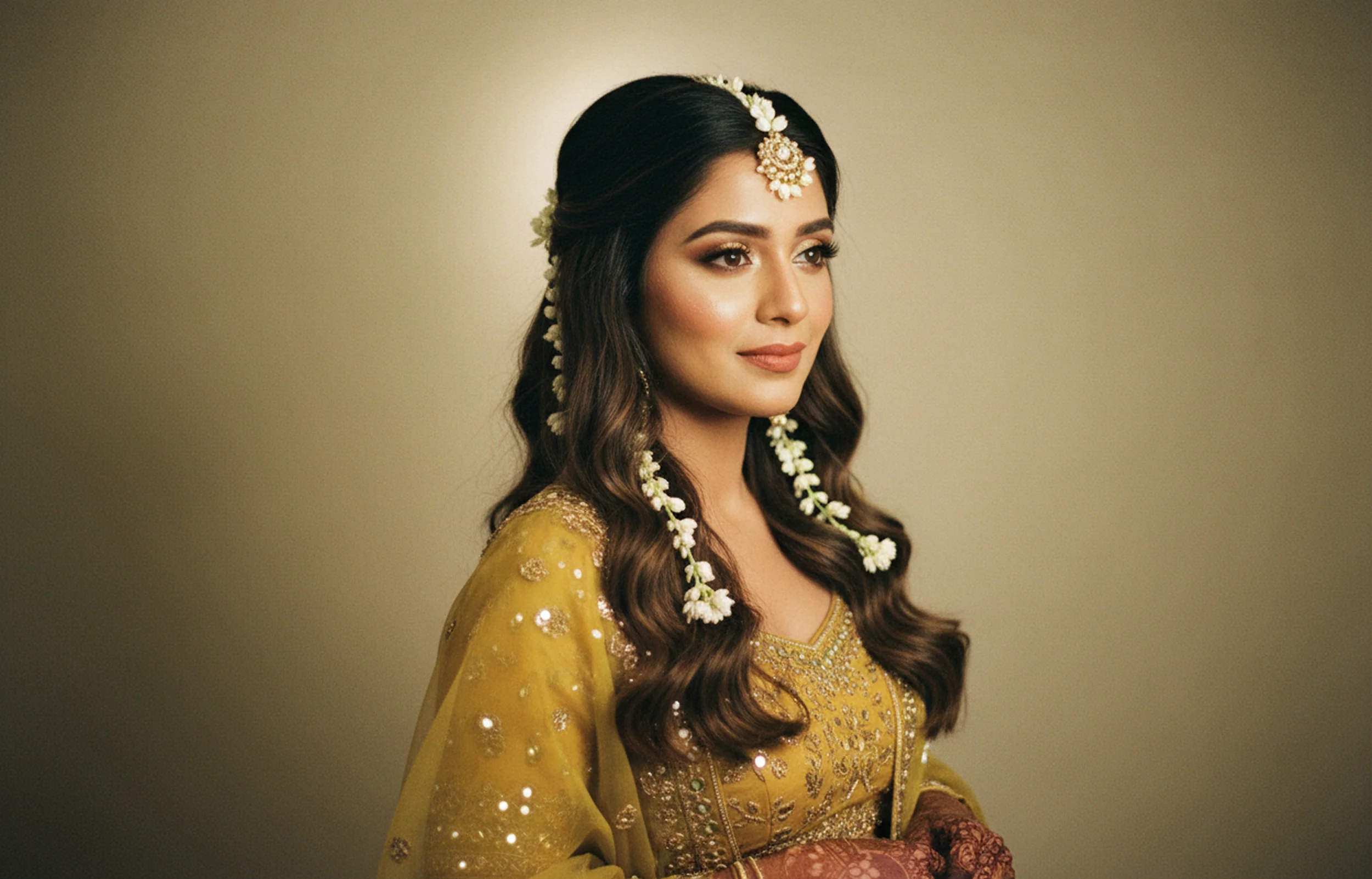
Mehndi hair should feel like a step up from everyday — not a full bridal production. The most common mistake is going too elaborate: a look that belongs at the ceremony ends up at the mehndi and then has nowhere to go for the main event. The sweet spot is hair that looks polished and intentional without feeling like it required an hour of backcombing and 40 pins.
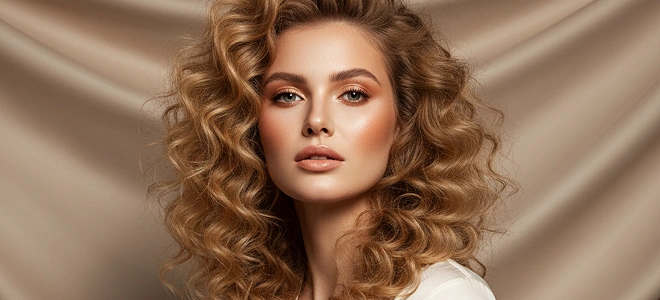
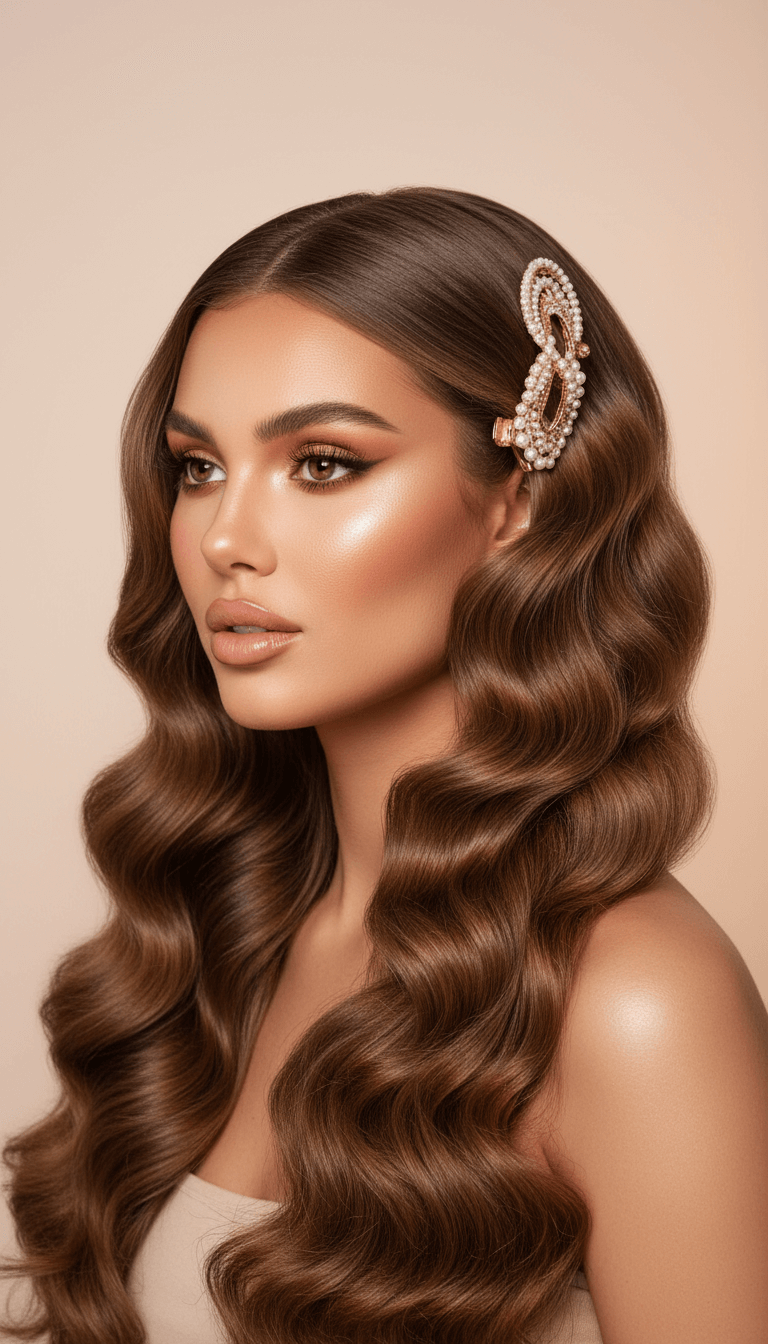
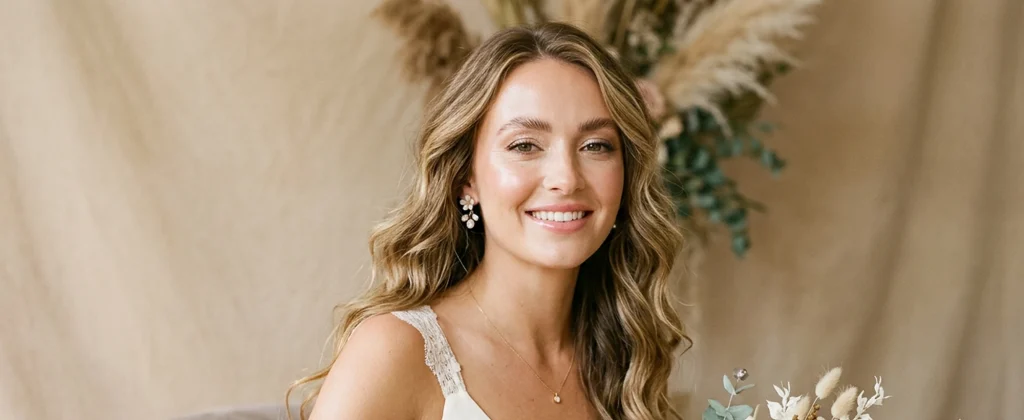
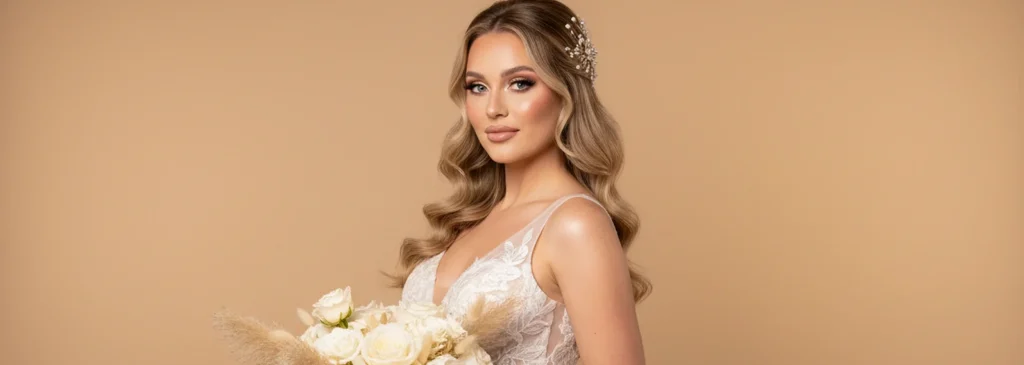
A classic for mehndi night — and for good reason. Loose, flowing waves or a soft blowout with movement reads beautifully in photos, works with most outfits and feels appropriately relaxed for the occasion. The key is texture: waves that look lived-in rather than salon-rigid. We often add a small accessory — a floral clip, a delicate gold pin — to elevate without overcomplicating.
A half-up look is one of the most versatile choices for mehndi night — it keeps hair away from the face for close-up photos, looks polished from the front and still has movement and softness from the back. Options include:
Braids have become a mehndi night staple for good reason — they’re detailed, they photograph well and they have a cultural resonance that feels right for the occasion. A loose side braid, a fishtail, or a braided half-up all work well. Keep the braid soft and slightly undone rather than tight and neat — it looks more intentional and wears better across a long evening.
If you’re working with finer or shorter hair, clip-in extensions can be a practical addition for mehndi night — adding volume and length without committing to anything permanent. We carry clip-in extensions and can apply them as part of the service. Worth considering if you want a look that photographs with more density than your natural hair currently has.
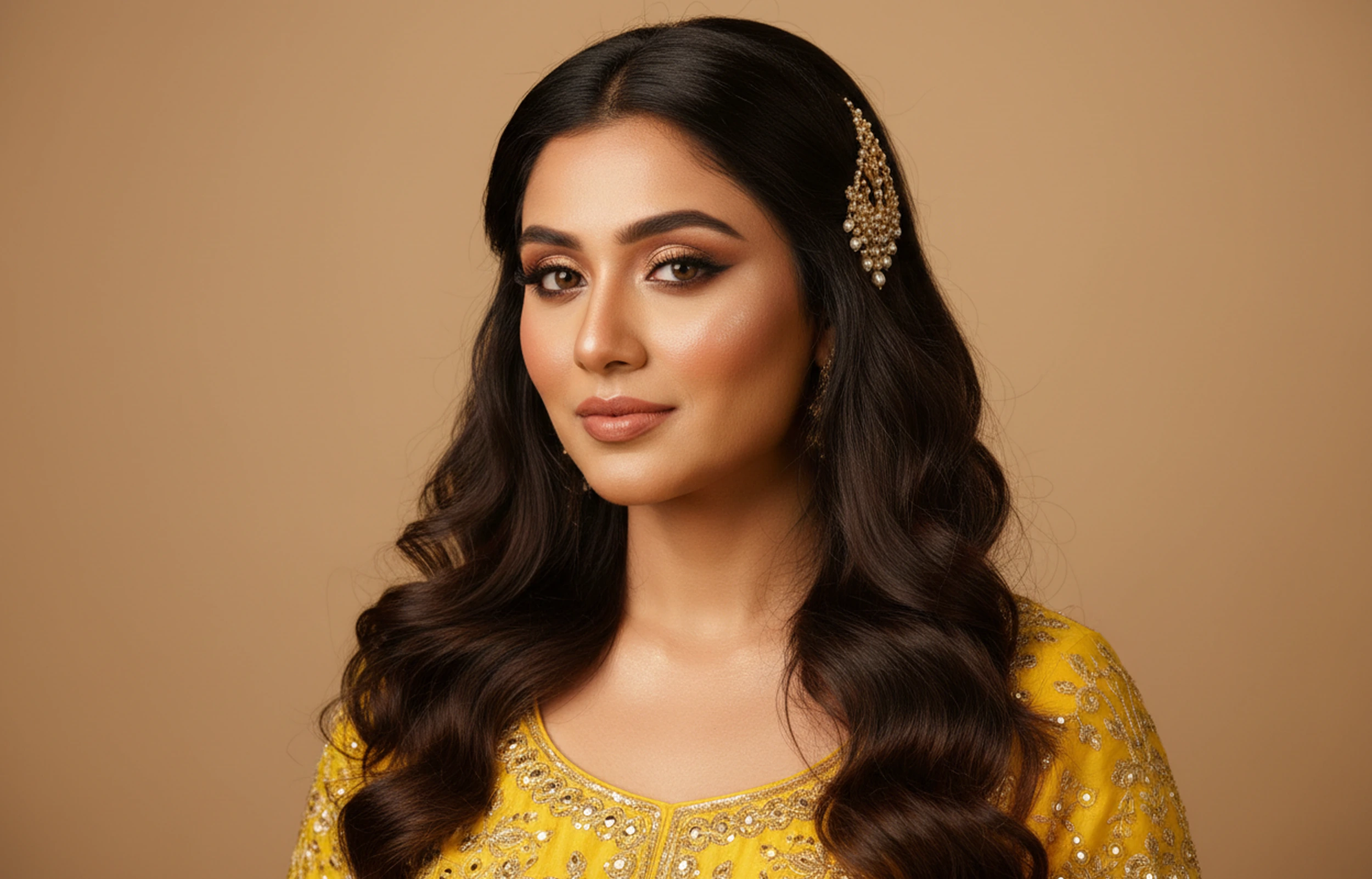
Mehndi nights run long — sometimes five, six hours or more. The look you start with needs to hold. A few things that make the difference:
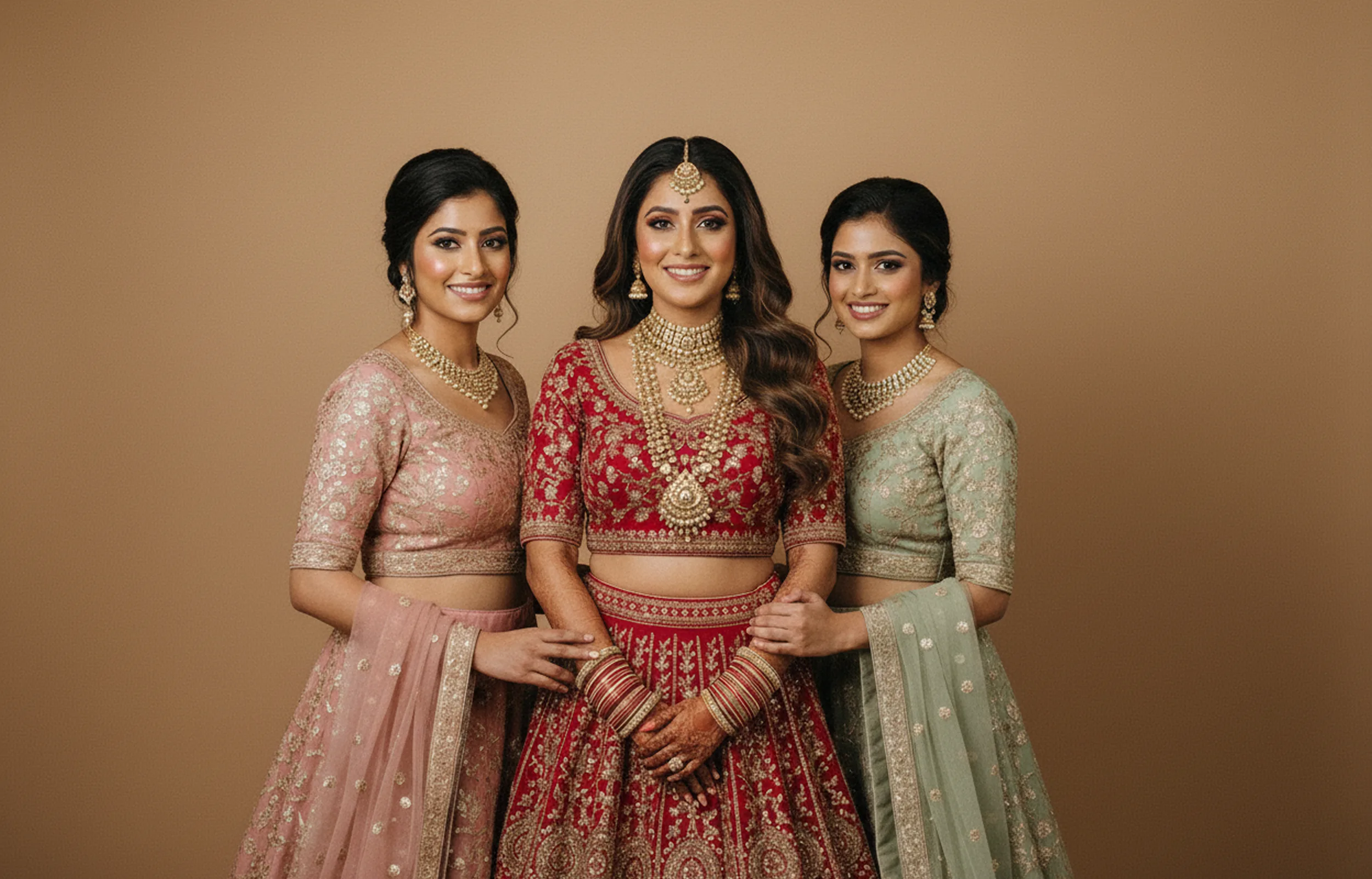
At mehndi night, the bride is the centrepiece but the bridal party is in most of the photos too. A coordinated look across the party doesn’t mean everyone wearing the same thing — it means a consistent palette and register. If the bride is in warm bronzes, the party in cool purples creates visual dissonance in group photos. Brief your party on the direction — warm vs cool, matte vs glowy, bold vs soft — and let them interpret it within those parameters.
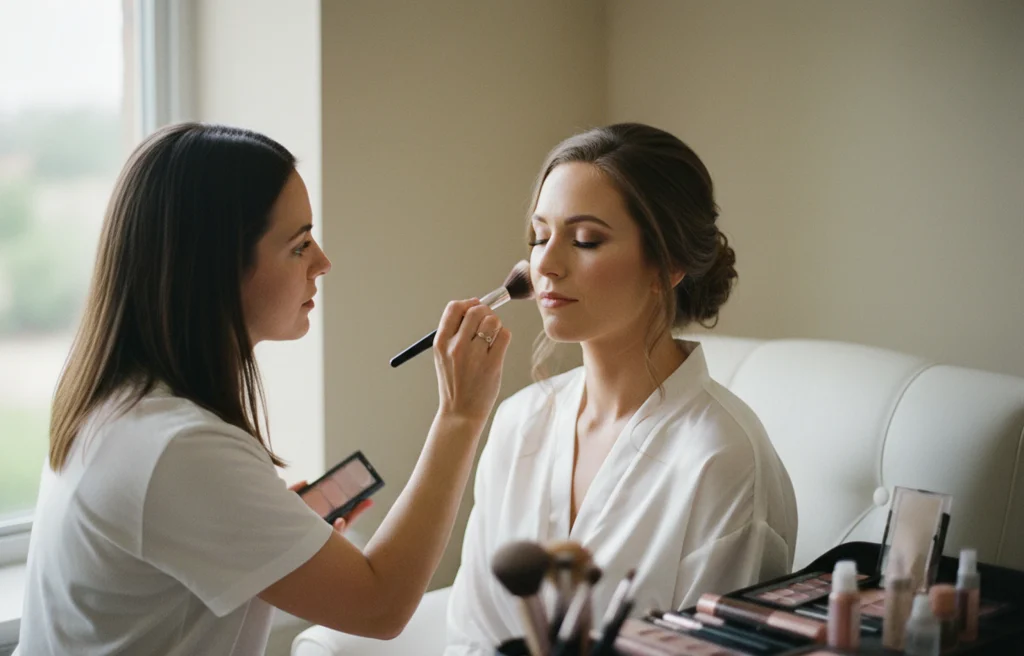
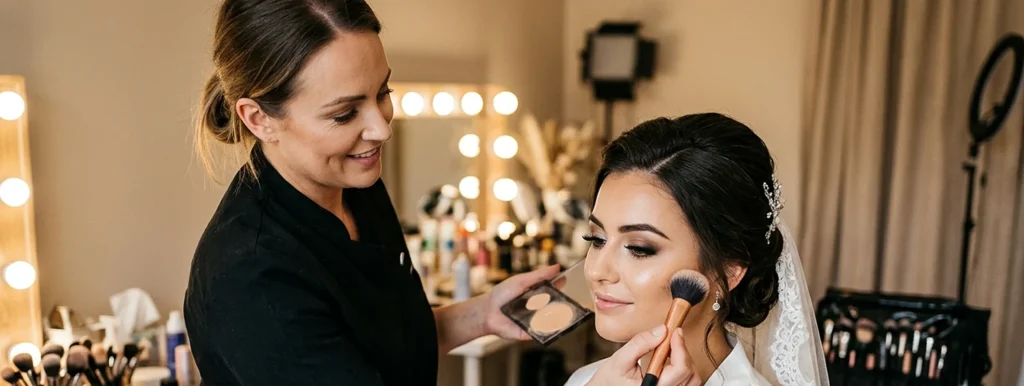
We handle bridal party bookings alongside the bride as standard. It keeps everyone in the same palette, on the same schedule and out of the chaos that comes from five people getting ready independently.
The Glam Mafia works across the GTA for all pre-wedding events — mehndi, sangeet, ceremony and reception. Mobile and on-location, we come to your venue with a full team and a complete kit. If you’re planning a South Asian wedding in Toronto, Brampton, Vaughan, Markham or Mississauga, get in touch early — pre-wedding event dates in peak season go fast.