Most brides see the finished result — the photos, the look, the moment the bride turns around and the room reacts. What they don’t see is everything that happened before that moment. A wedding morning for a professional bridal artist is a logistical exercise, a performance and a very long day, all compressed into a window that often starts before 5 AM and ends long after the reception gets going. We’re pulling back the curtain on what that day actually looks like — not the highlight reel version, but the real one. Because understanding the work behind the work is part of understanding what you’re booking when you book a professional team.
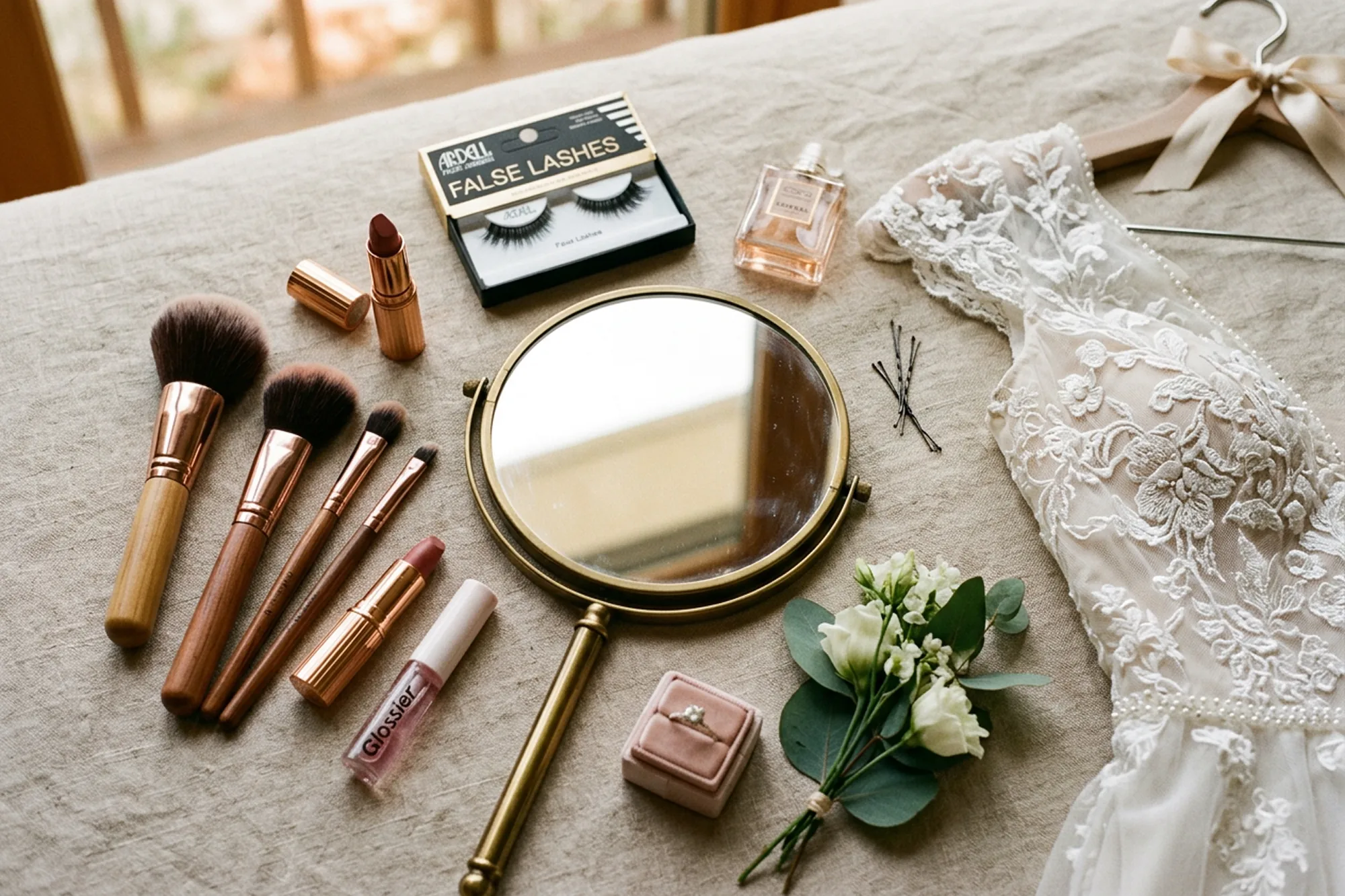
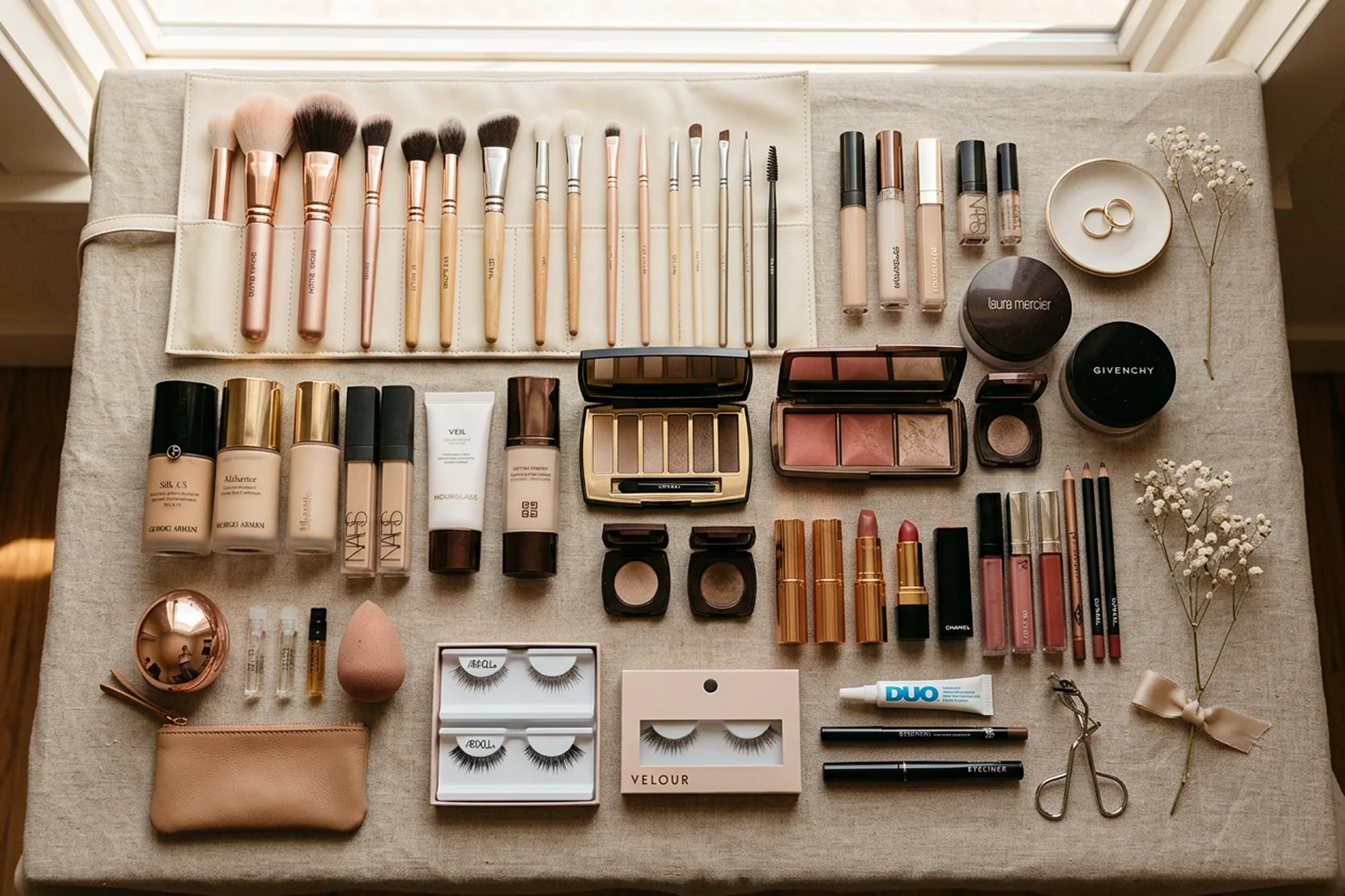
A wedding morning doesn’t start when the artist walks through the door. It starts the night before, sometimes earlier. Every kit is packed and checked against the confirmed brief for that specific booking — the look that was documented at the trial, the products that were tested on that bride’s skin, the specific lashes that were selected, the colours that were confirmed. Nothing gets assumed or left to memory. A professional bridal kit contains hundreds of products and the brief determines exactly which ones travel to which wedding. Getting that wrong on the morning of the job isn’t a recoverable situation.
The brief review happens the night before as well. The confirmed schedule — who’s getting what service, in what order, with how many minutes allocated per person — gets read through and any questions get resolved before the morning begins. If there’s a venue the artist hasn’t worked at before, the address gets mapped, the parking situation gets checked and the ETA gets calculated with buffer built in. A 5 AM start in Brampton with a 45-minute drive from the east end of Toronto requires leaving by 4 AM. That’s the math and it’s non-negotiable. The morning of a wedding is not the time to figure out logistics.
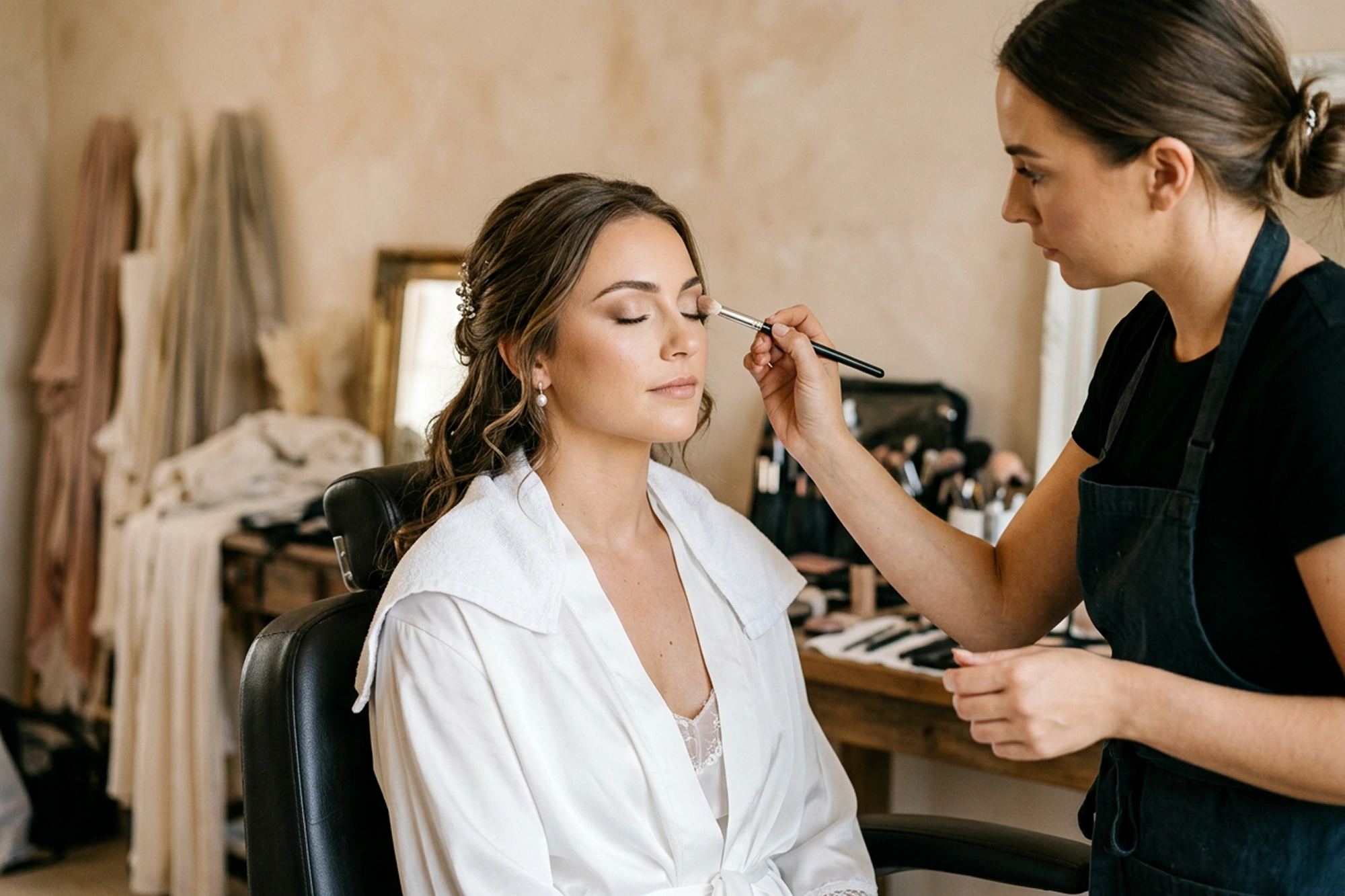
Most wedding mornings for a GTA bridal artist start between 4 AM and 6 AM depending on the ceremony time and the size of the party. The early start surcharges in our pricing aren’t arbitrary. They reflect the reality of what an early departure looks like: leaving home before the city is awake, driving across the GTA in the dark, setting up a full professional workstation in a hotel suite or getting-ready room before the first client sits down. By the time the bride is in the chair, the artist has already been working for an hour.
Setup takes 15 to 20 minutes when everything goes smoothly and longer when the room isn’t what was expected. Bridal suites vary enormously — some are genuinely well-designed for getting-ready mornings, with good lighting, ample mirror space, accessible outlets and enough room for a full team to work simultaneously. Others are converted storage spaces with a single wall mirror and poor overhead lighting. Part of the skill of running a professional morning is assessing the environment quickly and adapting — repositioning chairs, finding the best natural light source, managing the electrical situation, making a cramped space work without slowing the schedule down.
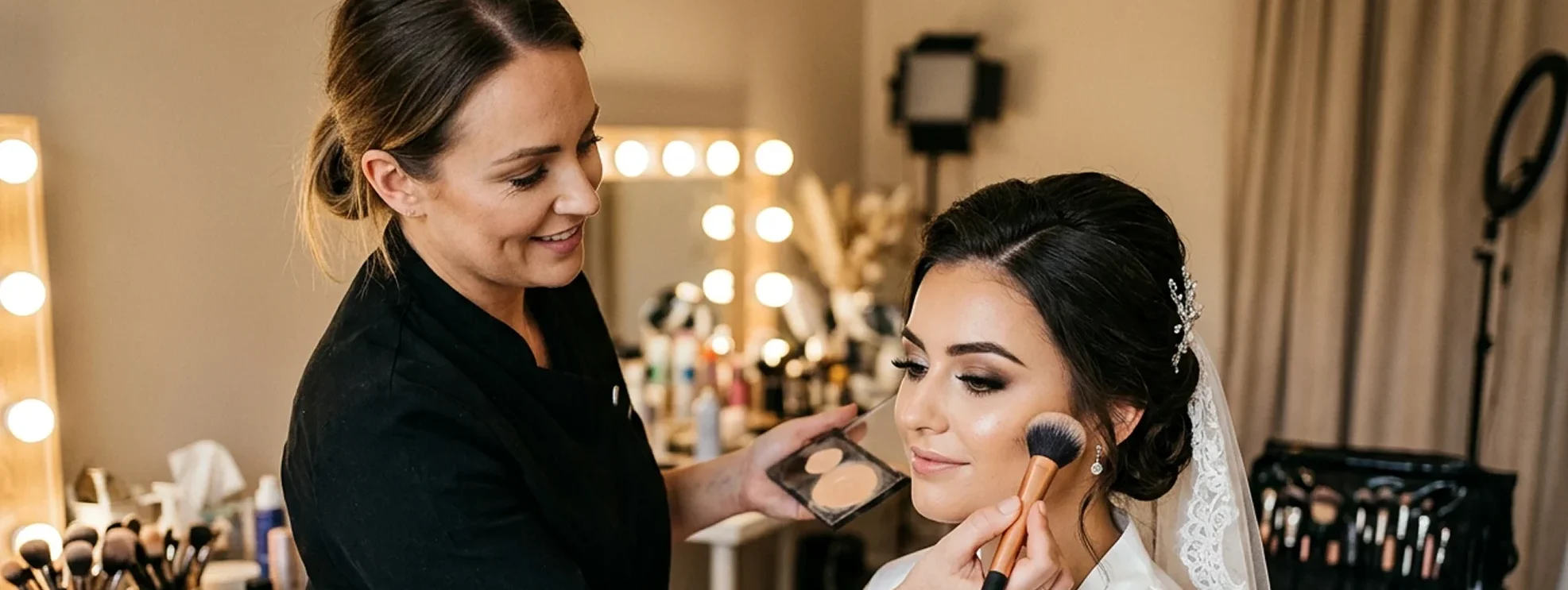
The bride’s slot is the longest and the most detailed of the morning — typically 90 minutes to two hours for a full makeup and hair service. It’s also the most high-stakes, because everything that happens in this chair was agreed in the trial and the brief, and the expectation is exact replication in a completely different environment. The hotel room isn’t the trial studio. The lighting is different, the stress level in the room is different, the timeline pressure is real. An experienced bridal artist runs this slot the same way every time: methodical, sequenced and quiet when quiet is needed.
The conversation during the bride’s slot is one of the underappreciated parts of the job. A bride sitting in the chair on her wedding morning is carrying a lot — excitement, nerves, the weight of everything the day means. Some brides want to talk through every detail of what’s happening. Others need to sit in relative quiet and breathe. Reading that correctly and responding to it — being present and engaged without adding to the noise, being calm without being cold — is a genuine professional skill. The chair is one of the few quiet moments a bride gets on her wedding day, and part of what we’re providing is the space to actually have it.
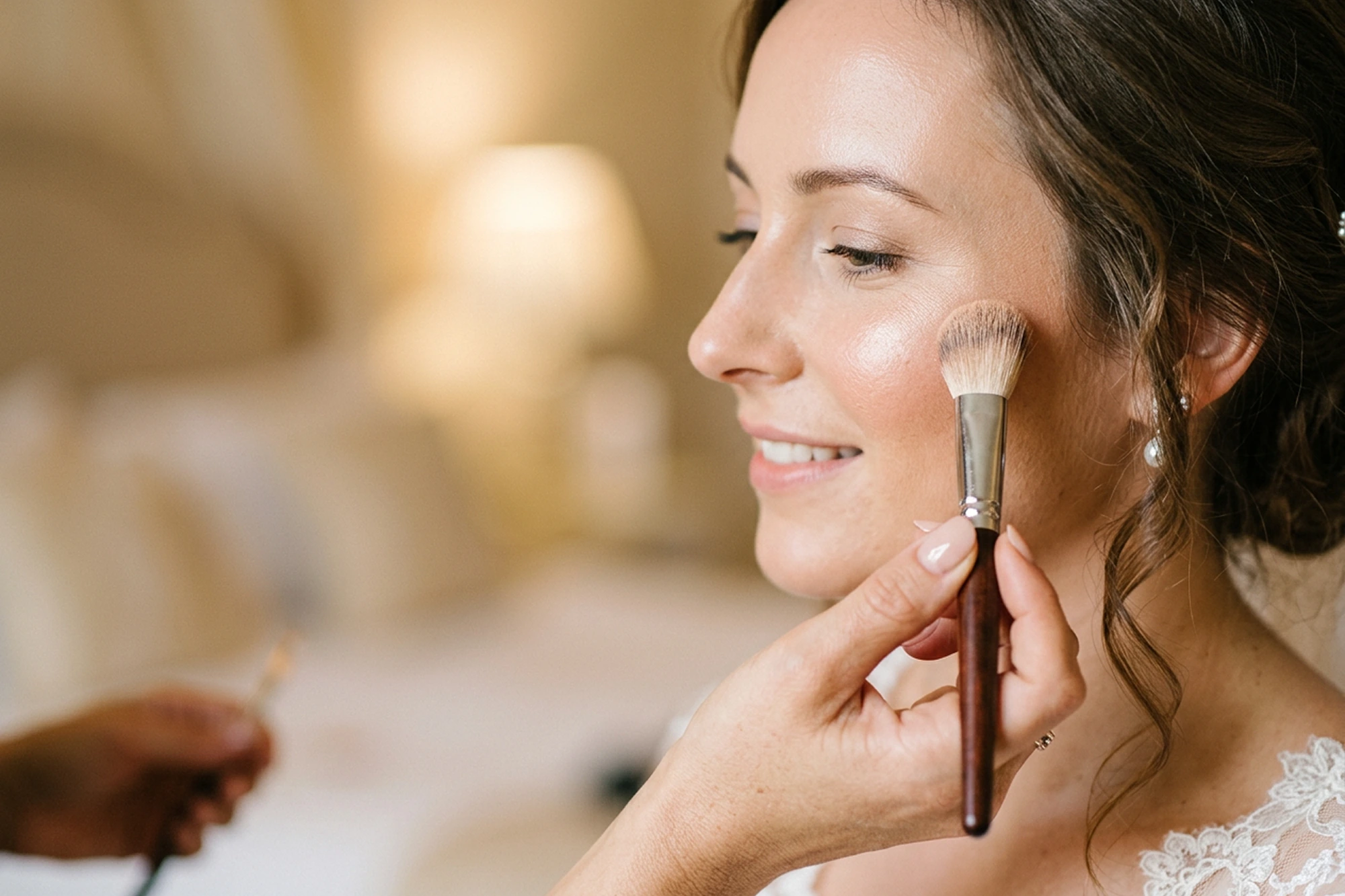
Once the bride is done, the clock really starts. The bridal party — bridesmaids, mother of the bride, mother of the groom, flower girls — all have their own slots, each one allocated to the minute on the schedule. A typical bridal party member gets 45 to 60 minutes for makeup and hair. That’s not a lot of time when you factor in someone arriving a few minutes late, sitting down, explaining what they want (even though it was confirmed in advance) and settling in. Managing a morning with five or six people through that kind of tight sequencing requires constant low-level project management alongside the actual artistry.
The variables that affect a party morning are predictable but not always preventable. Someone’s hair is wet when they sit down — add 40 minutes for a blow-dry. Someone changed their mind about what they want since the booking confirmation. The flower girl won’t sit still. A family member who wasn’t on the original list appears and expects to be accommodated. These situations come up on most wedding mornings in some form and the response is always the same: assess the impact on the schedule, communicate to the bride immediately if the timeline is at risk, adapt without creating stress. The morning belongs to the bride. The artist’s job is to protect it.
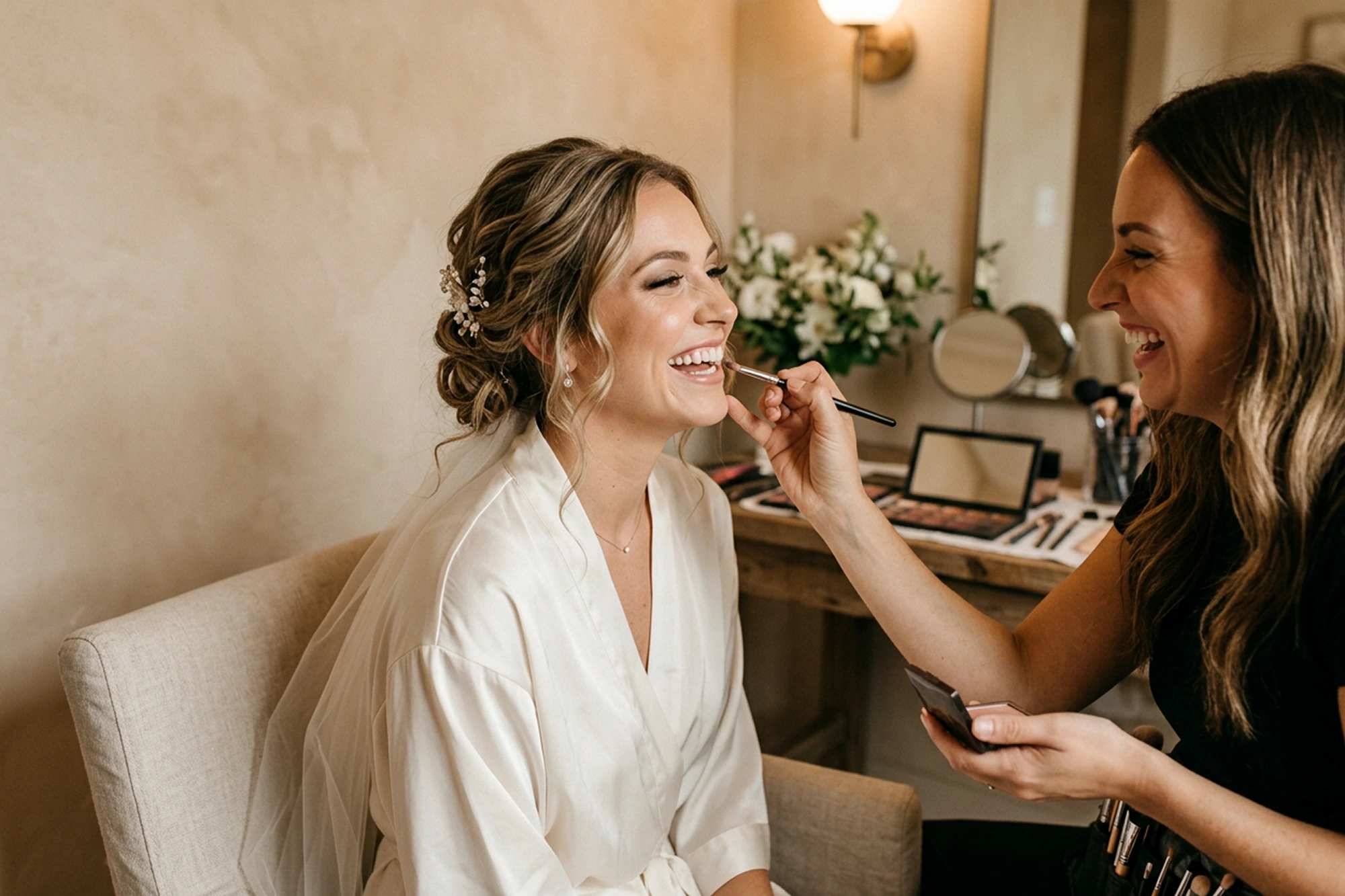
The final 30 to 45 minutes of a wedding morning are where everything comes together and where a lot can go wrong if it’s not managed carefully. The full party is done, the bride is in her dress, the photographer is shooting details and the family is starting to gather. The artist’s role shifts in this window: less application, more management. A veil that needs to be secured without disturbing the hair. A lipstick refresh before the first family portraits. An errant hair that needs to be pinned back. A panicked moment about something that was never part of the plan — a sister who spilled something, a bridesmaid whose mascara ran.
The handoff — the moment the artist packs up and the bride takes the touch-up kit and goes — is the last professional moment of the morning and it deserves attention. We walk through the touch-up kit with the bride: what’s in it, when to use each product and how. The setting spray for a quick refresh mid-reception. The blotting papers before photos. The lip product that matches exactly what was applied. It sounds like a small thing and it is — but a bride who knows exactly how to handle the practical reality of her look through a twelve-hour day is a more confident bride, and that shows in everything that follows.
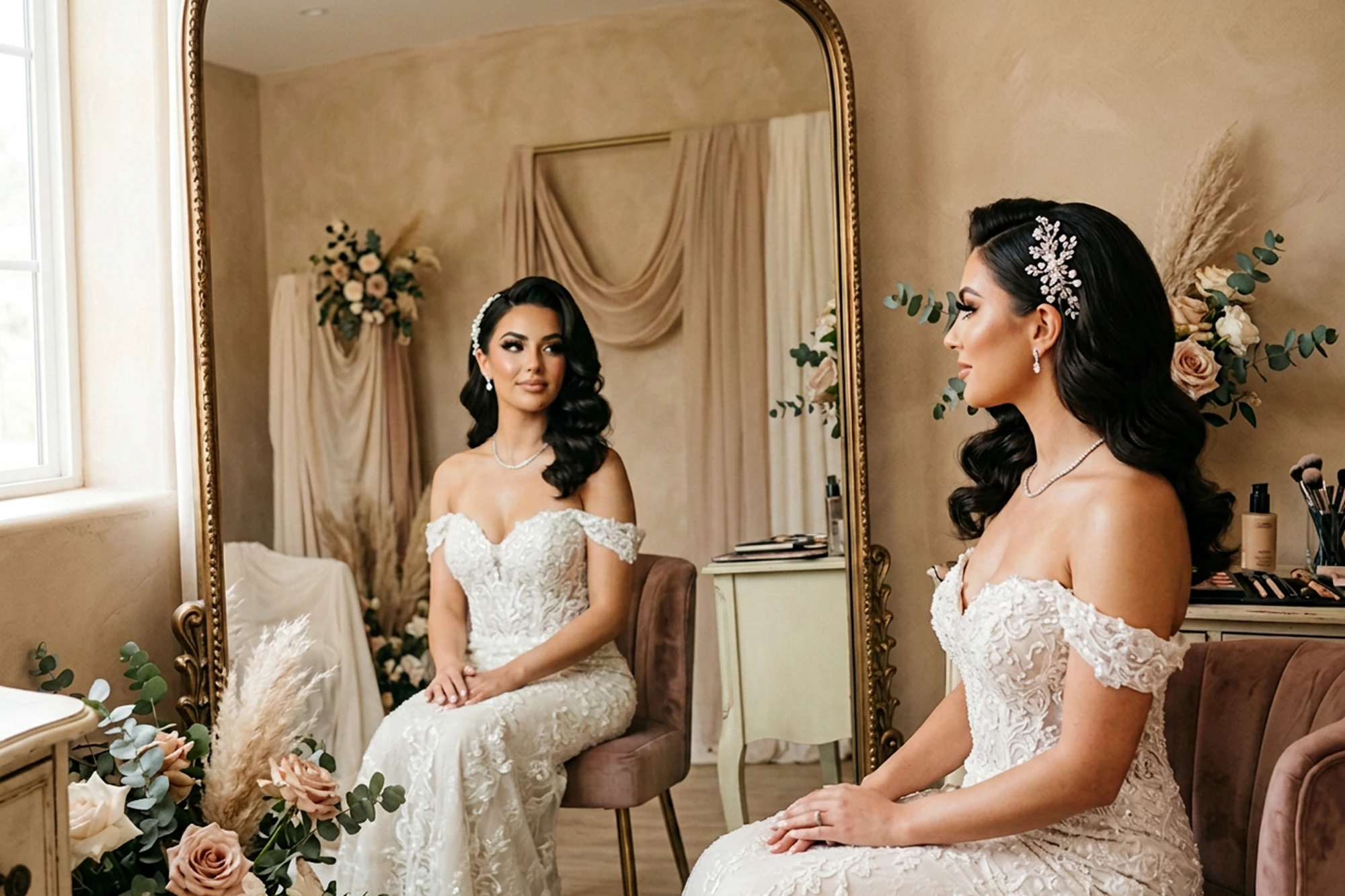
The artist’s day doesn’t end when they leave the getting-ready suite. For South Asian weddings or multi-event bookings, there may be a return slot in the afternoon or evening — a reception look, a hair reset, a full second-look application. That return is booked and priced separately and planned into the day from the beginning. For single-event bookings, the post-morning work is less visible but still real: kit cleaning and restocking, notes on the booking for future reference, following up with the bride after the wedding to confirm how everything held up.
The feedback loop matters more than it might seem. Knowing that a product held perfectly through a 35-degree outdoor ceremony in August, or that a setting spray failed under specific conditions, or that a bride’s skin reacted to something mid-day — that information improves every booking that follows. A professional operation learns from every wedding it works. That accumulated knowledge, across hundreds of bookings over years in the GTA market, is part of what you’re accessing when you book a team with genuine experience. It’s not just skill in the chair. It’s everything that’s been learned in every chair before yours.
When you book The Glam Mafia for your wedding morning, you’re not just booking a makeup and hair service. You’re booking a team that has run hundreds of mornings like yours — that knows what can go wrong, has planned for it and knows how to keep the day on track regardless. We work across Toronto, Brampton, Vaughan, Markham, Mississauga and the GTA. Mobile and on-location, with a team behind every booking and a brief that’s been built through the trial before anyone arrives on the day. If you have a date, start the conversation now — the earlier the booking, the more runway we have to do the planning properly.