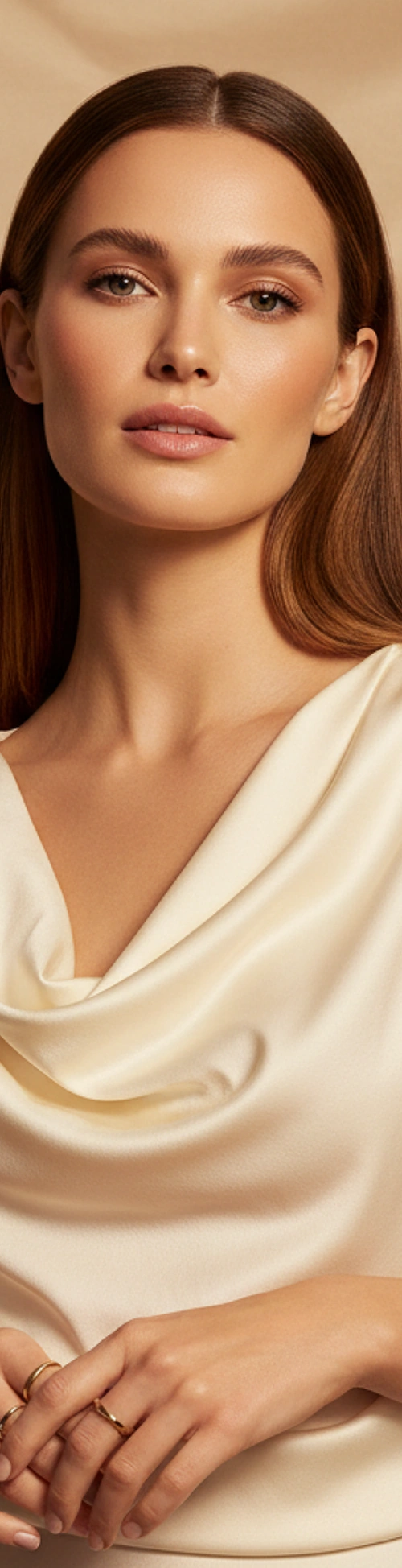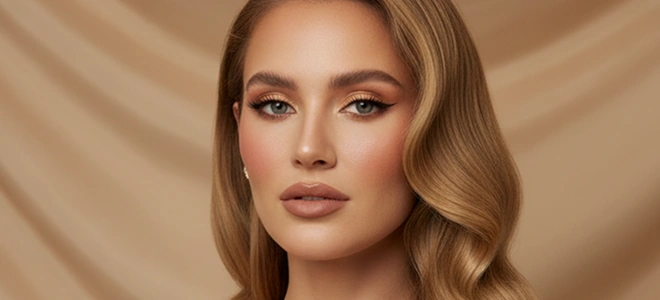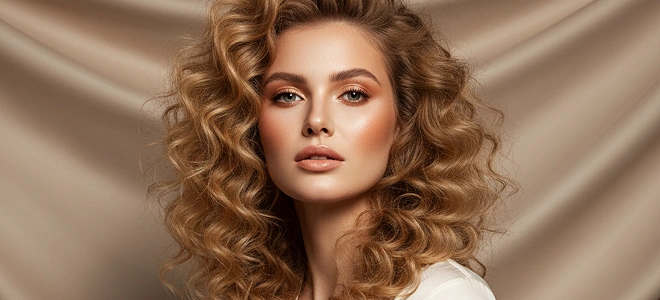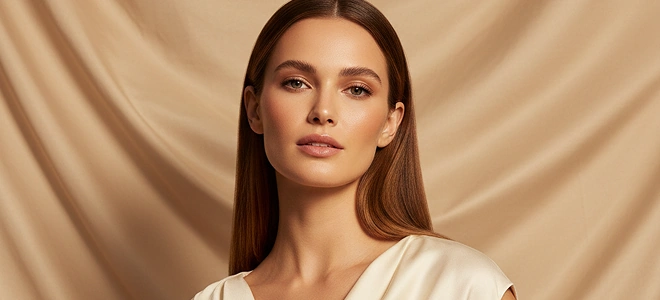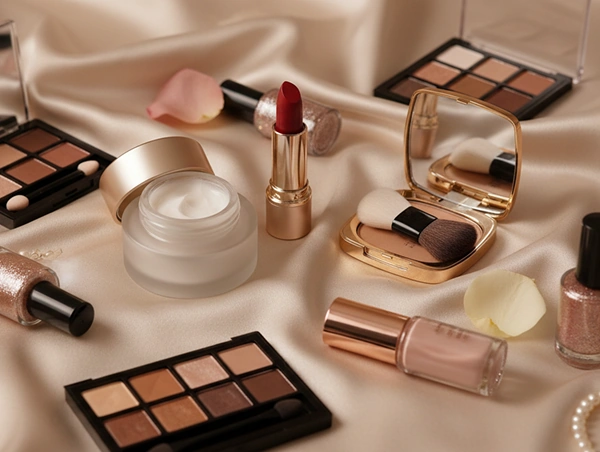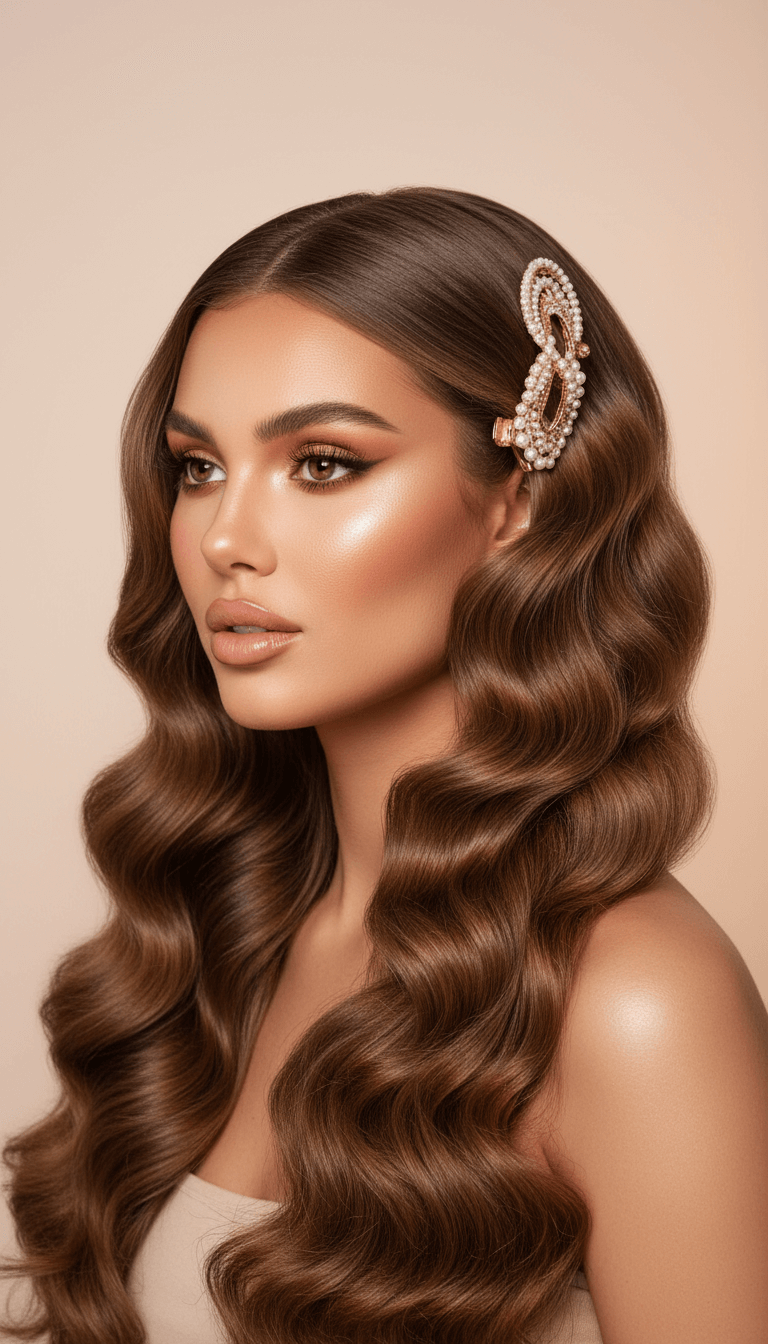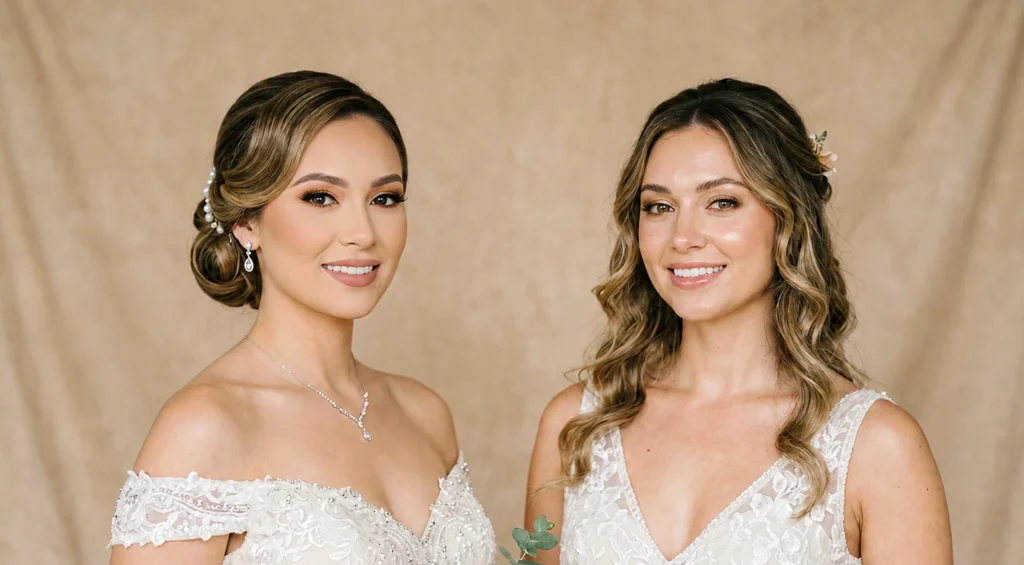
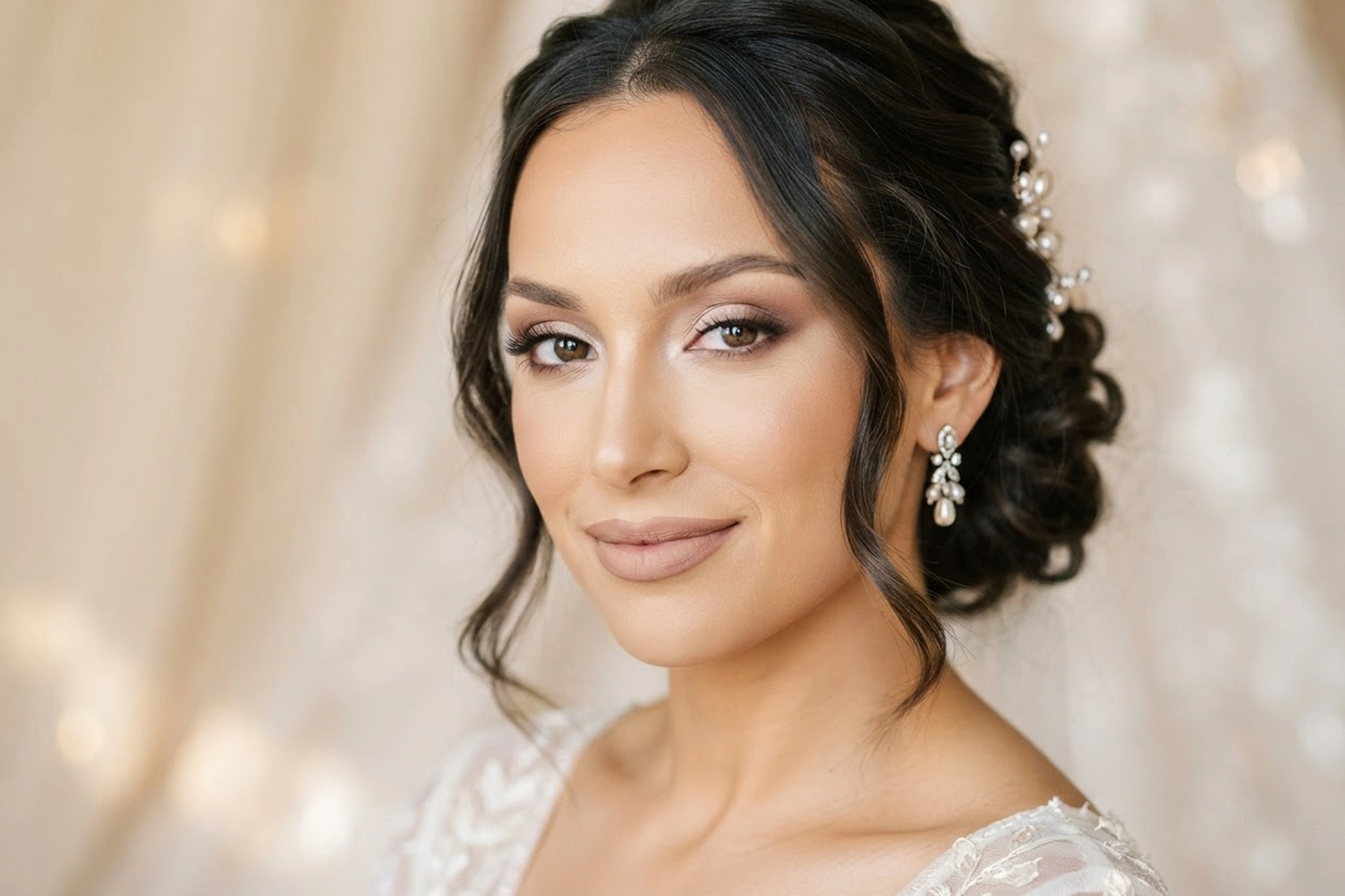
A wedding day in the GTA runs long. Getting ready starts at 6 or 7 AM – sometimes earlier – and the last dance doesn’t happen until midnight. That’s fifteen or sixteen hours your makeup needs to stay in place through a ceremony, a cocktail hour, a reception, dancing, crying and a full day of photos from every possible angle. Long lasting wedding makeup isn’t about applying more product or using heavier formulas. It’s about the right sequence, the right products for your specific skin type and the right setting strategy at every stage of the application. This guide covers exactly that – the pro approach to building a look that holds from morning prep to the final song.
The most common mistake brides make with wedding makeup longevity is thinking it’s a finishing step – something you solve with a setting spray at the end. In reality, longevity is built from the very beginning of the application, before a single product touches the face. The skin’s condition on the morning of the wedding, the products that were applied to it in the hours before the artist arrived and the primer that goes on before foundation are all as important as anything that comes after. A beautifully applied foundation on poorly prepped skin will not last twelve hours regardless of what you spray over it at the end.
Skin on wedding morning needs to be hydrated, calm and primed correctly for the products going on top. Dehydrated skin breaks down foundation faster – the product grips to dry patches, oxidizes unevenly and starts to look patchy within a few hours. Overly moisturised skin – too much product applied too close to the foundation – creates a slippery base that prevents the foundation from adhering properly. The sweet spot is skin that’s been consistently moisturised in the weeks before, has a lightweight hydrating layer applied at least 20 minutes before foundation and is primed with a formula matched to the skin type. That’s the foundation of long-wear – literally and technically.
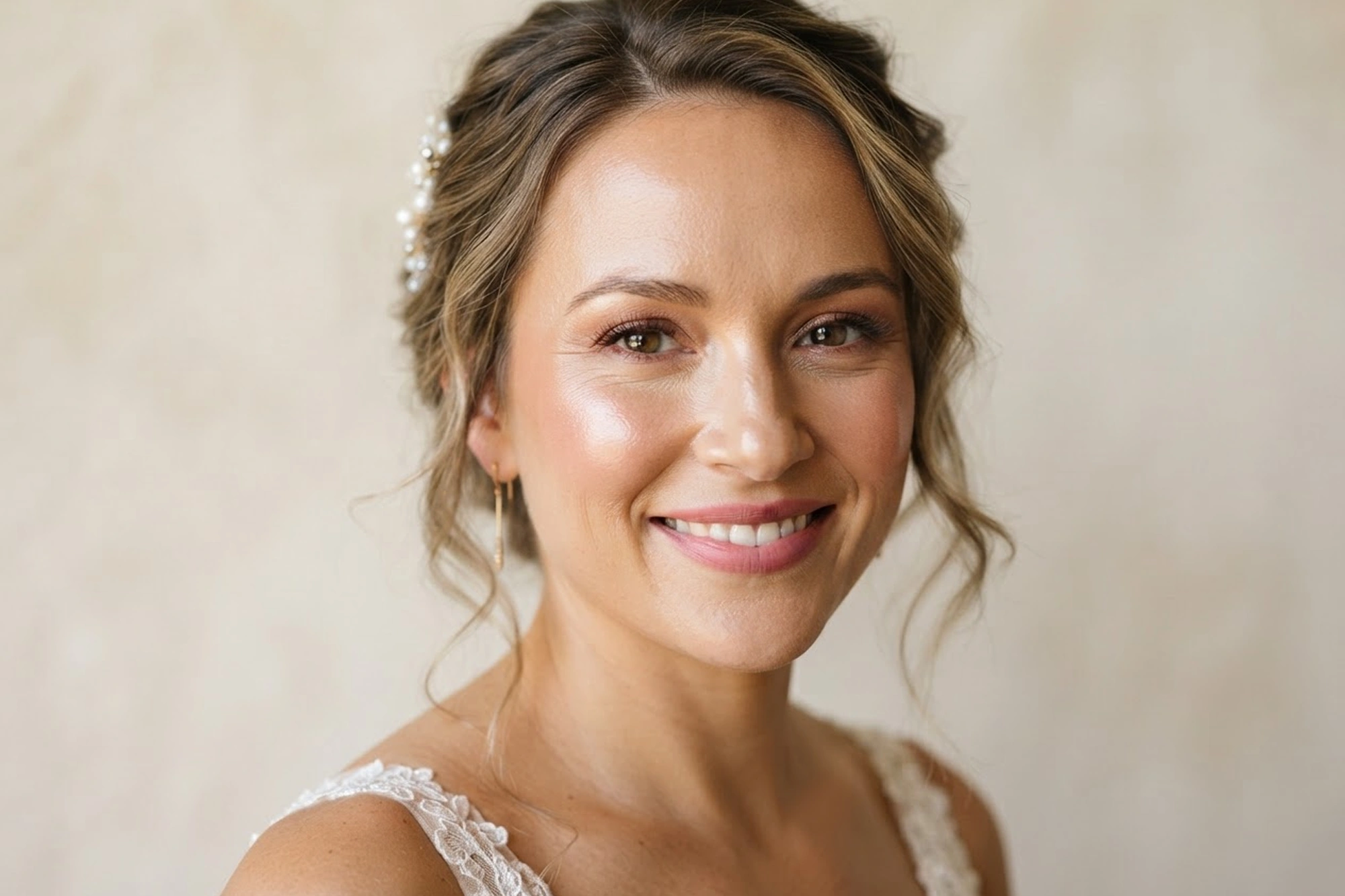
Primer is the most underestimated product in a long-wear bridal look – and the most commonly misused. The job of a primer is to create the right surface for foundation to adhere to and to address the specific factors that will cause your look to break down. That means primer selection is not one-size-fits-all: the right primer for oily skin that breaks down because of excess sebum is completely different from the right primer for dry skin that breaks down because of dehydration and fine line settling. Using the wrong primer for your skin type can actually reduce longevity rather than improve it, which is why the trial is where this gets tested – not on the morning itself.
Beyond skin type, primer also addresses specific concerns. Pore-minimising primers create a smoother surface for foundation. Colour-correcting primers neutralise redness or sallowness before the base goes on, reducing the amount of foundation needed to achieve coverage. Hydrating primers add a layer of moisture that prevents foundation from clinging to dry patches. Mattifying primers absorb excess oil and extend the wear of foundation on oilier skin types. A professional kit carries multiple primer formulas for exactly this reason – one product doesn’t cover every situation, and using the right one makes a measurable difference to how the look holds through a full day.
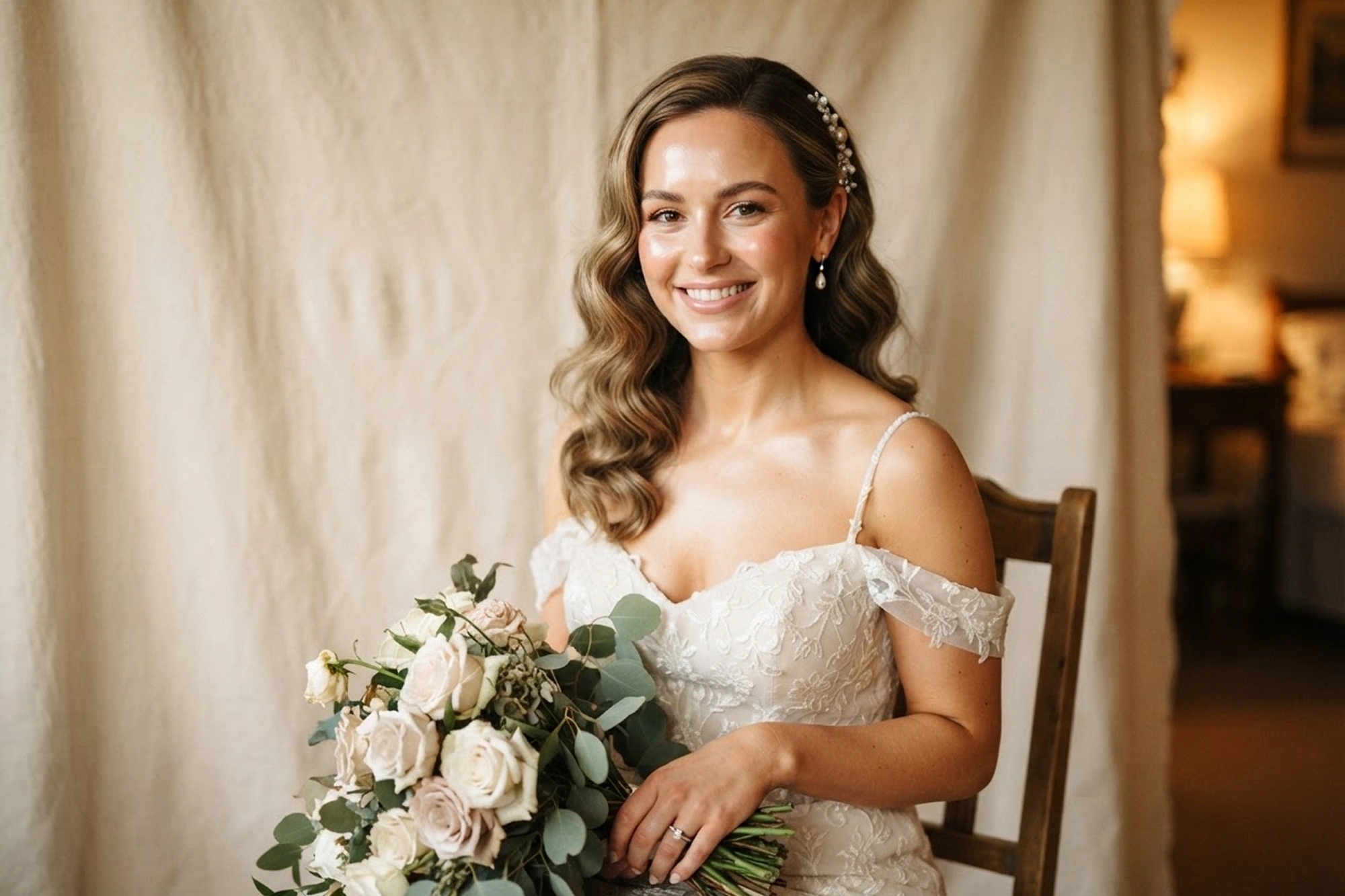
Foundation longevity comes from how it’s applied as much as which product is chosen. A long-wear formula applied in one thick layer will not perform as well as a standard formula applied correctly in thin, buildable layers. The reason is adhesion: thin layers bond to the skin and to each other in a way that a single heavy application doesn’t. They also flex with the face – through expressions, through movement, through a full day of changing conditions – without cracking or separating. Building coverage gradually takes longer but produces a base that holds significantly better and photographs more consistently across different lighting conditions.
Product selection still matters, of course. Long-wear or transfer-resistant foundations are formulated to resist the specific things that cause breakdown – sebum, humidity, friction – and they’re the right choice for a wedding day regardless of skin type. The finish should be chosen based on the environment: a satin or natural finish for most settings, a matte finish for outdoor summer or very oily skin, a luminous finish only when the humidity is low and the look is being shot primarily indoors. Setting the foundation immediately after application – before moving to concealer – locks the base in place and is a step that significantly extends wear time in practice.
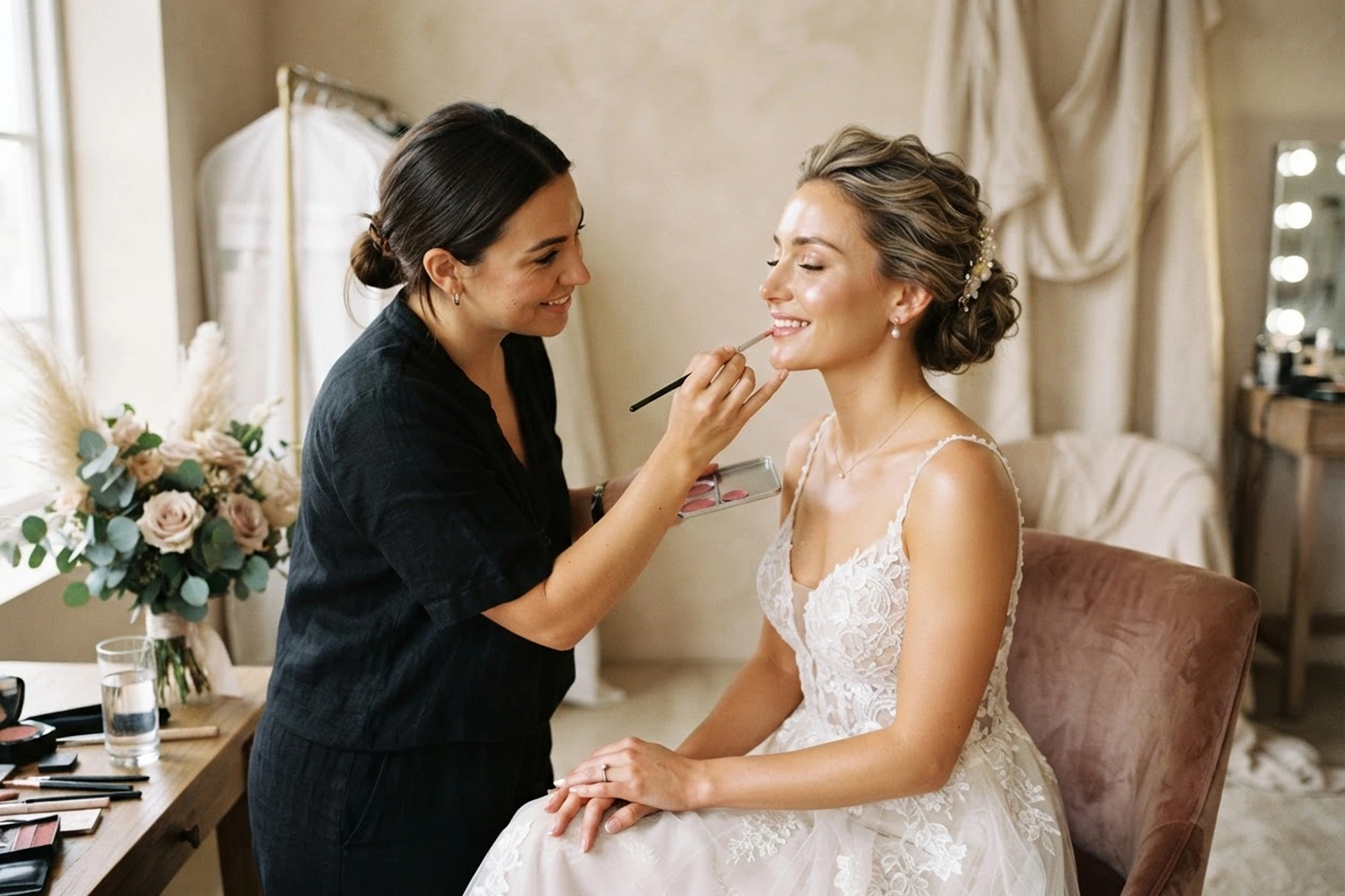
The eyes are the highest-risk area for wedding day makeup breakdown – and the most visible when something goes wrong. Eye makeup is subject to more mechanical stress than any other part of the face: blinking, rubbing, tearing, humidity, heat, the friction of glasses if you wear them. A beautifully executed eye look that migrates under the eyes or creases on the lid by mid-ceremony is one of the most common and most preventable failures in bridal makeup. The solution is consistent and straightforward: waterproof everything on the eyes, use a primer on the lid, and layer products in the right sequence so each one locks the next in place.
Crying is worth naming directly because it affects nearly every bride to some degree and it’s not something to be caught off guard by. Emotional moments – the first look, the vows, the speeches – put real stress on eye makeup that wasn’t built to handle moisture. A waterproof mascara and waterproof liner will survive crying that a regular formula will not. False lashes, applied correctly with a professional adhesive, stay in place regardless. The area below the eye – where mascara most commonly travels – should be set with a very light translucent powder before the eye products go on, which creates a barrier that prevents smudging regardless of what happens above it.
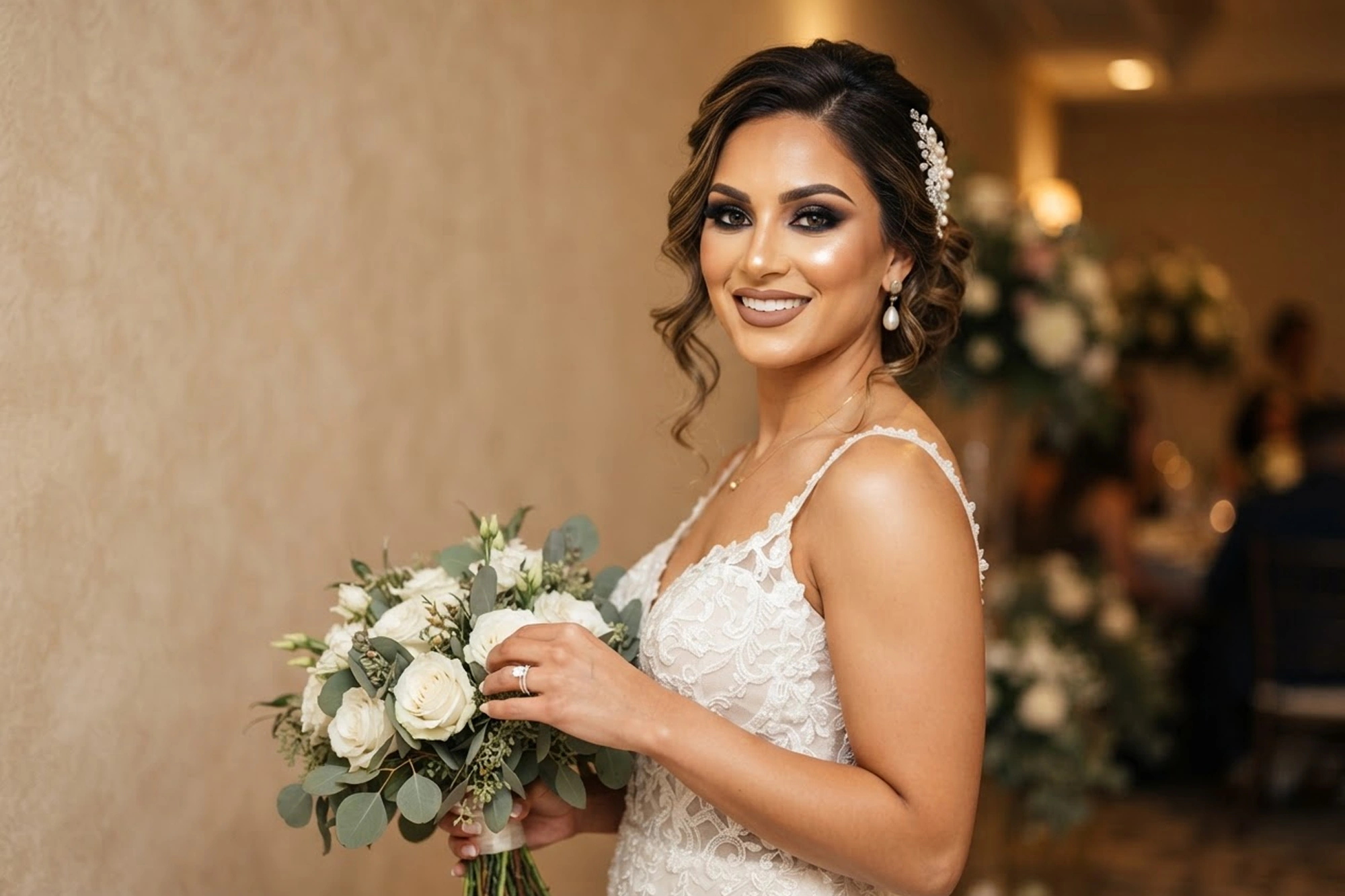
Lip makeup is the one element of a bridal look that genuinely does need touch-ups through the day – but the frequency and visibility of those touch-ups can be dramatically reduced by the right formula choice and application technique. A traditional bullet lipstick applied directly to bare lips will not survive a wedding meal. A long-wear liquid lip or a lip stain applied correctly, with a gloss layered over the top, will hold through dinner with minimal fading and can be refreshed in 30 seconds with the product in the bride’s touch-up kit. The difference in the photos – between a lip that’s holding and one that’s faded to a ring around the outside – is significant.
The application technique for long-wear lips is different from everyday application and it’s worth knowing before the trial. A lip liner applied first – slightly overfilled into the lip – creates a base that anchors the colour and prevents feathering. A long-wear liquid lip or stain is applied on top, pressed with a tissue between coats to blot excess product, then a second coat applied and set. A gloss over the top adds dimension and means the product that wears away first is the gloss – easy to refresh – while the stain underneath holds the colour. Done this way, the lip can go through a full reception with only one or two touch-ups.
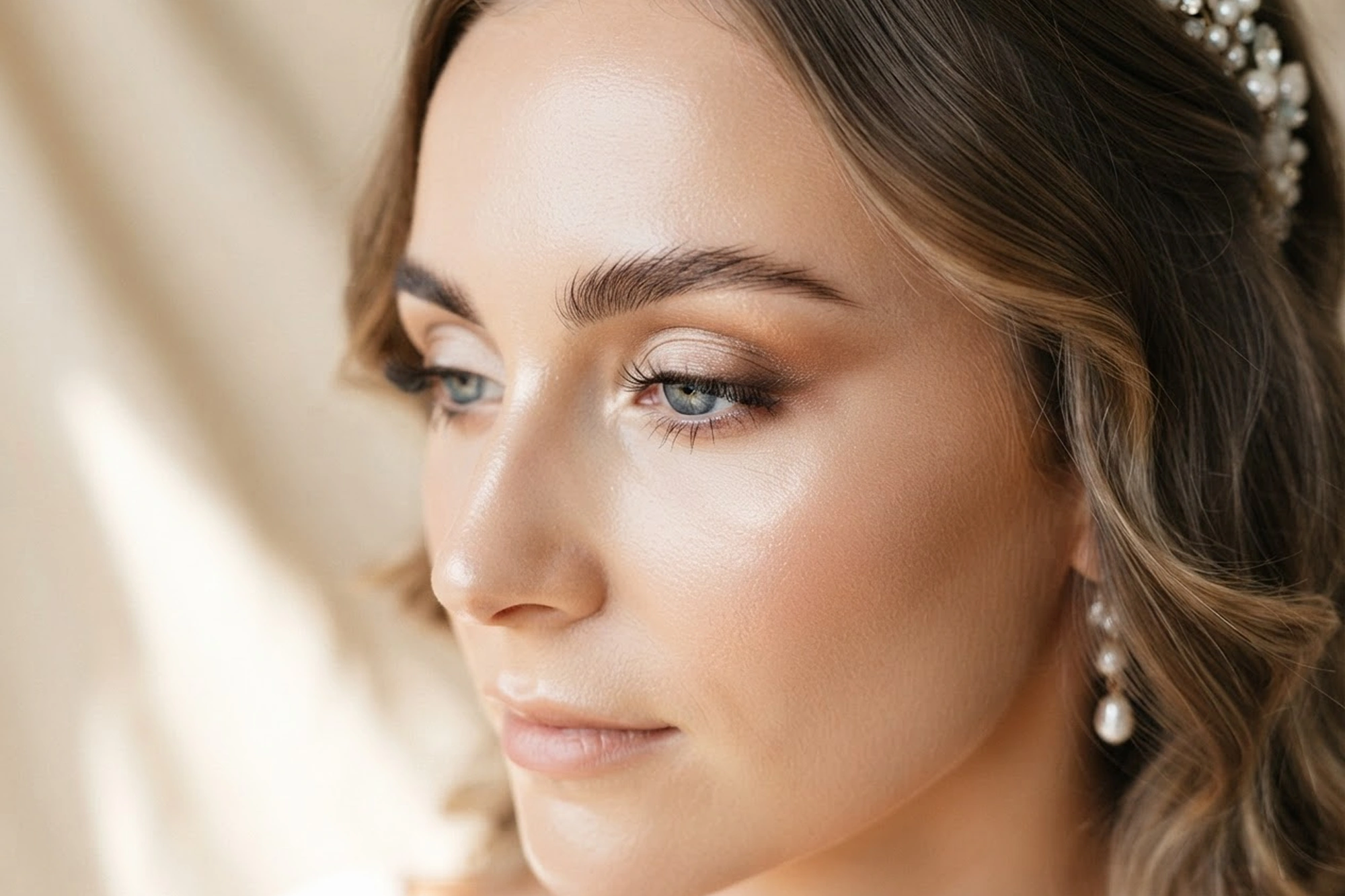
Setting is where most brides either lock in a look that will last or inadvertently undo work that was built correctly below it. Over-powdering – applying too much translucent powder across the whole face in an attempt to ‘set everything’ – is one of the most common mistakes and it produces a look that appears flat in photos, looks cakey in heat and emphasises texture rather than smoothing it. The professional approach to setting is targeted: powder goes where it’s genuinely needed (T-zone, under eyes, any areas that produce excess oil) and is applied lightly everywhere else. The rest of the setting work is done by a finishing spray.
Setting spray is the most undervalued product in a long-wear bridal look. Applied correctly – two light coats held 25 to 30 centimetres from the face, each coat allowed to dry before the next – it fuses the layers of product together in a way that powder cannot. It also softens the powdered look into something more skin-like, which photographs significantly better than a fully powdered finish. For outdoor summer weddings or any situation where humidity is a factor, a long-wear setting spray is not optional. It’s the final step that determines whether everything built underneath holds or breaks down under environmental pressure.
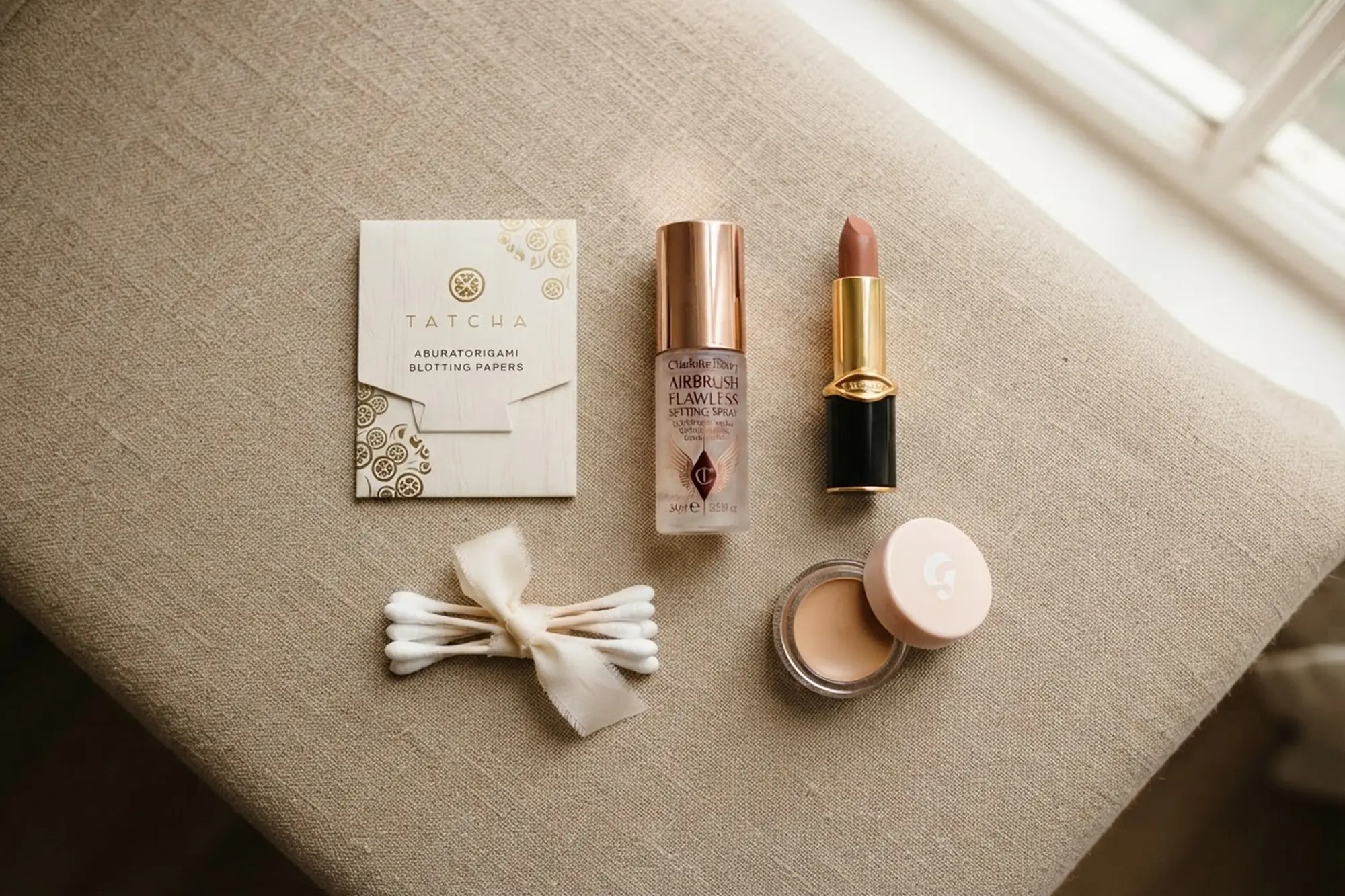
A well-built touch-up kit is the difference between a bride who feels confident managing her look through a full day and one who’s constantly anxious about how things are holding. The kit doesn’t need to be large – in fact, a smaller, more targeted kit is more useful than a large one that requires searching through it at a reception. Everything in it should serve a specific purpose and be something the bride knows how to use. We go through the touch-up kit with every bride at the end of the morning: what each product is for, when to use it and how. It takes five minutes and it matters.
The goal of the touch-up kit is not to redo the look – that’s not realistic or necessary if the base was built correctly. It’s to handle the specific, predictable points where touch-ups are genuinely needed: the lip after the meal, the T-zone after the first dance, the under-eye after the speeches. Targeted, quick and invisible – the kind of touch-up that happens in 60 seconds in a bathroom mirror and leaves no trace that anything needed refreshing. Everything else should hold on its own.
At The Glam Mafia, long-wear isn’t a feature we add on request – it’s built into every bridal application as standard. Every product choice, every setting step and every technique decision is made with a full-day wedding in mind. We work with brides across Toronto, Brampton, Vaughan, Markham, Mississauga and the GTA. Mobile and on-location, every booking starts with a trial where we test the look on your skin, confirm the longevity and build the brief before the day itself. If you want a look that holds from the morning prep to the last dance, start the conversation here.