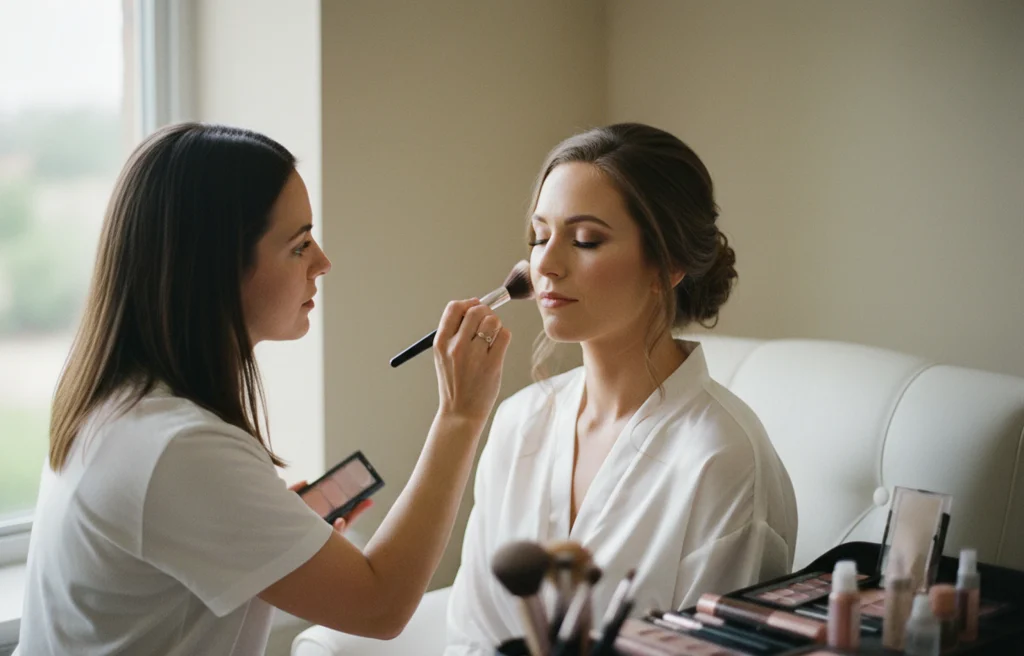

South Asian weddings don’t have a single morning — they have a season. Mehndi, sangeet, ceremony, reception. Sometimes a chura ceremony, sometimes a haldi. Across four or five events, each with its own look, its own outfit and its own timeline, the hair and makeup logistics alone can feel like a project. That’s because they are.
We’ve worked through hundreds of South Asian wedding weekends across the GTA and we know exactly where things go wrong when the planning isn’t tight enough. This guide is the full picture — event by event, week by week, what needs to happen and when.
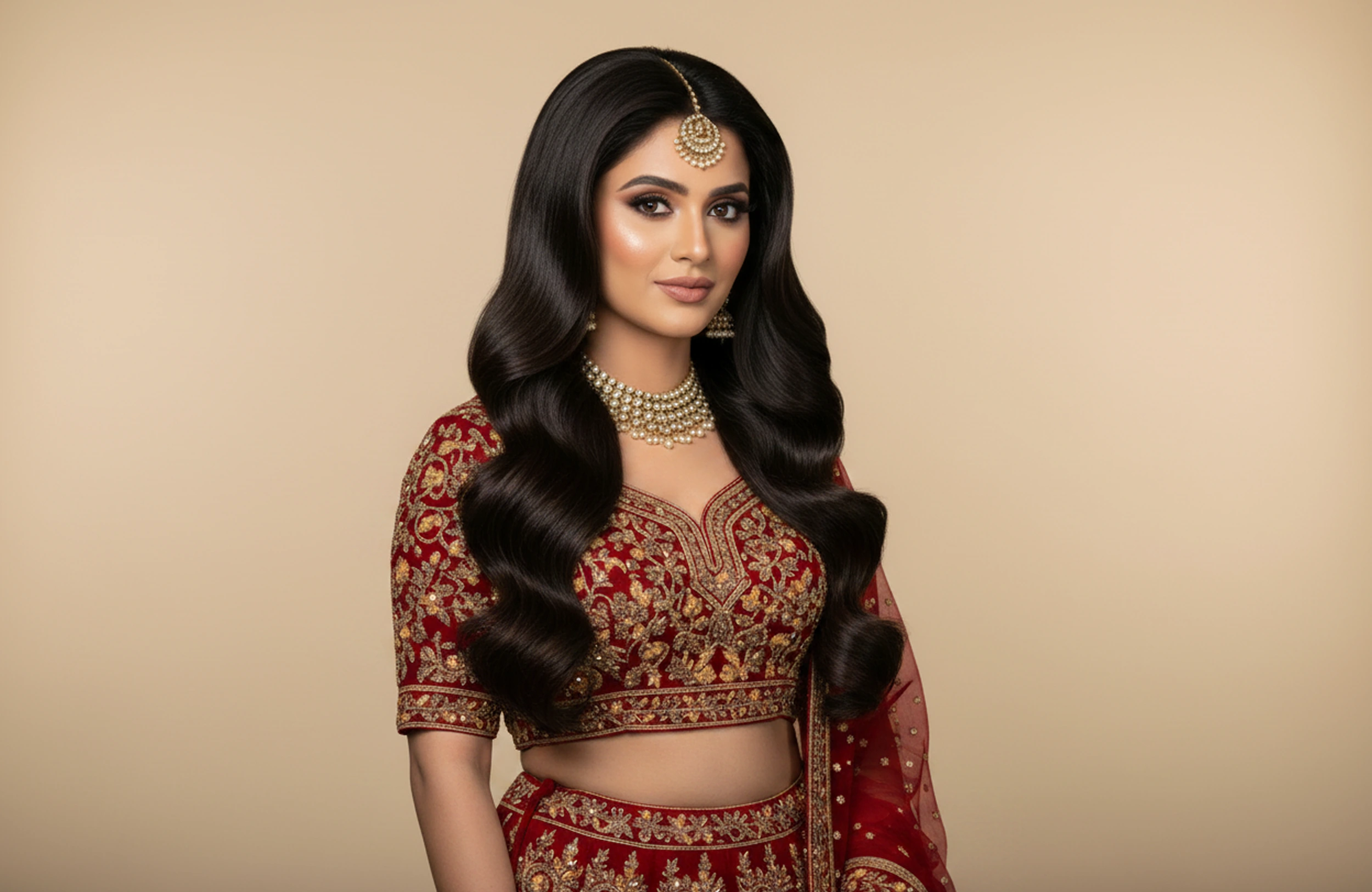
A standard Western bridal morning might involve three or four people getting ready over two to three hours. A South Asian wedding morning often involves eight to twelve people, multiple looks for the bride across different events, tight ceremony start times that can’t shift and a getting-ready environment that’s already full of family, emotion and activity. The margin for error is smaller at every level. A late start compounds across every person in the queue — if the bride runs 30 minutes behind, the entire party runs 30 minutes behind, and that time doesn’t get recovered.
An artist who’s never run a large South Asian wedding morning won’t fully understand how different the logistics are until they’re in it. The setup is different, the pace is different and the consequences of falling behind are different. What makes the difference is building the schedule from the ceremony time backward, not from wake-up time forward.
You start with the moment the bride needs to be camera-ready and work back from there, assigning every person a fixed time slot before the morning begins. Everyone knows when they sit down and when they’re done. That’s how a complex morning stays on track.
Most brides underestimate how far in advance the hair and makeup planning needs to start. It’s not just about booking a team — it’s about giving yourself enough runway to make informed decisions, complete a trial, adjust if anything needs changing and coordinate a bridal party that might span ten or more people across multiple events. The best teams in the GTA book out fast, especially for peak-season Saturdays between May and October. If you wait until three months out, your first choice of artist may already be gone. Here’s the full planning arc broken down by window, starting from as far out as 12 months before the wedding.
This is earlier than most brides expect to be thinking about hair and makeup — but at this stage the goal is simply to secure your team before the calendar fills. Lock the venue too: bridal suite quality affects your entire getting-ready morning and it’s worth seeing in person before you sign.
Once your outfits are in progress, your beauty brief can take real shape. You can’t finalise a makeup palette without knowing your outfit colours, and you can’t set a hair direction without knowing your jewellery. Use this window to get the key conversations started.
This is the most important planning window. Your trial should happen here — early enough that there’s time to adjust anything that needs changing, late enough that your look is fully formed and your outfits are confirmed. Don’t push the trial closer to the wedding than this.
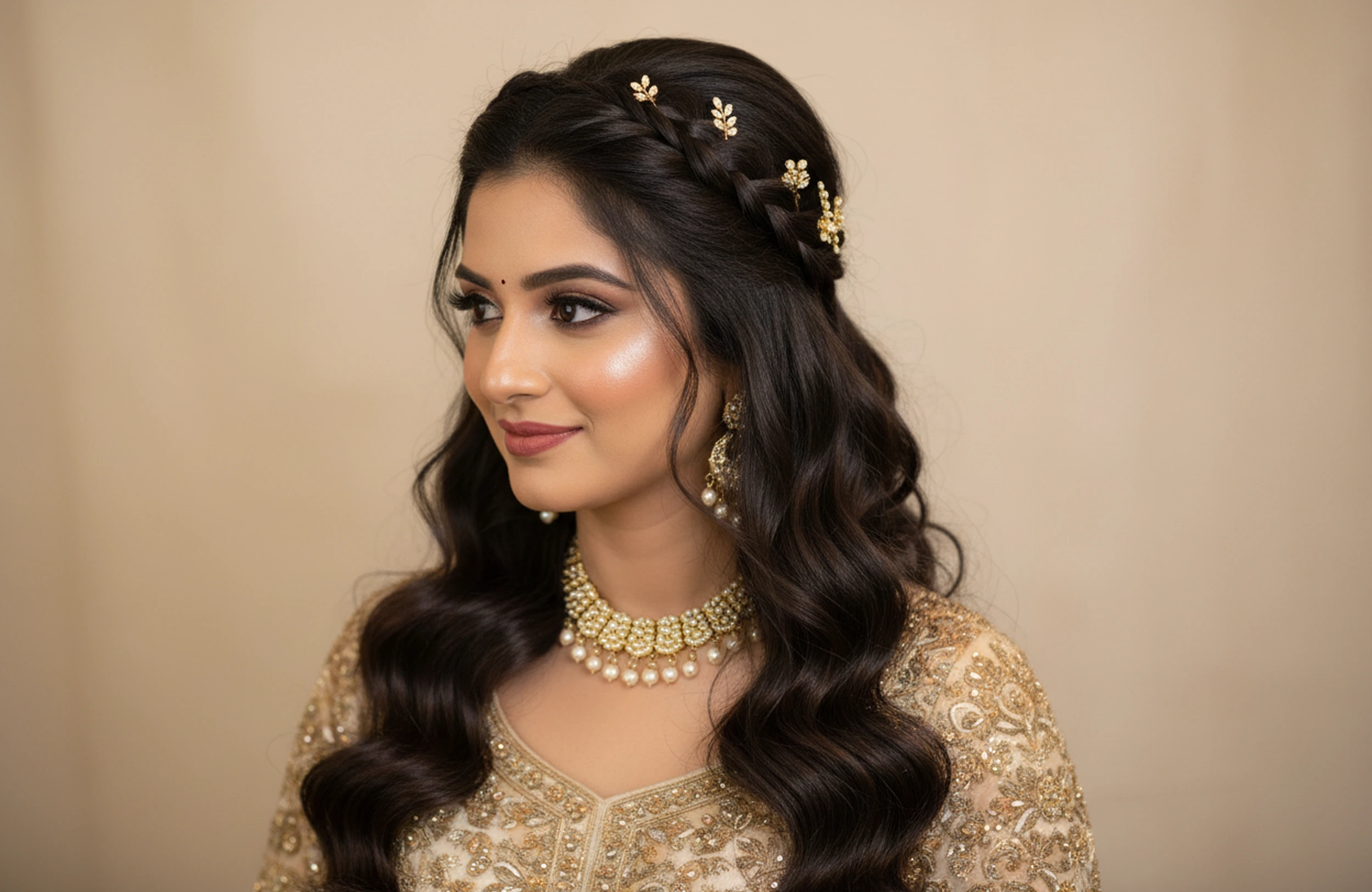
This window is about getting your skin and hair into the best possible condition. Whatever you establish here will show on the day — both the good and the neglected. Consistency matters more than any single product or treatment.
Everything gets confirmed in writing here. No assumptions, no ‘we discussed it verbally.’ Every booking, every person, every time slot.
The week before is not the time to introduce anything new. Lock everything in and let your skin and hair rest.
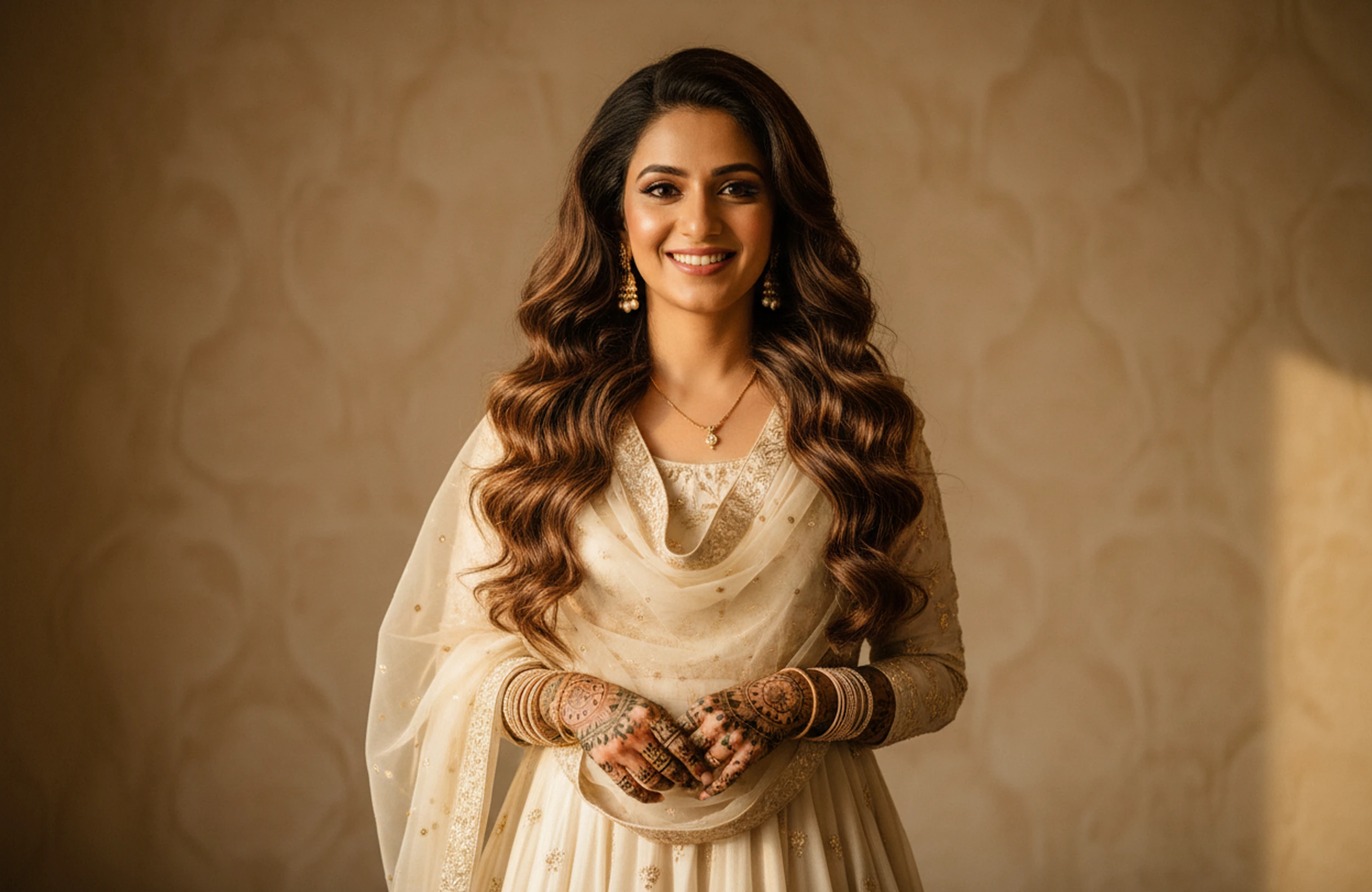
Below are realistic morning schedules based on our direct experience running South Asian wedding events across the GTA. These are frameworks built around typical headcounts and ceremony times — your actual schedule will be customised around your specific party size, venue access time and event start. The core logic is always the same: work backward from when the bride needs to be done, assign fixed slots to everyone else and build in a 20–30 minute buffer at the end for family photos, touch-ups and the inevitable last-minute detail. Below are three common scenarios.
Mehndi tends to be the most relaxed of the events — but that doesn’t mean the getting-ready time is unplanned. For an evening mehndi starting at 6 PM with a party of four:
| Time | What’s Happening |
| 1:00 PM | Artist arrives, sets up kit |
| 1:30 PM | Bride: skin prep and makeup begins |
| 2:30 PM | Bride: hair begins |
| 3:30 PM | Bride complete — bridal party begins |
| 3:30–5:30 PM | Party of 4: makeup and hair (2 artists, 45 min per person) |
| 5:30 PM | Touch-ups, final photos, pack up |
| 6:00 PM | Event begins |
This is the one that requires the most precision. Most South Asian ceremonies start between 10 AM and 12 PM — and they don’t move for anyone. For a 10:30 AM ceremony with a party of six, the math requires an early start. That’s not optional; it’s arithmetic.
| Time | What’s Happening |
| 5:00 AM | Very early start — artist arrives |
| 5:15 AM | Bride: skin prep, base, full makeup application |
| 6:45 AM | Bride: hair — updo, dupatta prep, tikka placement |
| 8:00 AM | Bride complete — 2 artists begin bridal party |
| 8:00–10:00 AM | Party of 4: makeup and hair (30–45 min per person) |
| 10:00 AM | Full party complete — family photos begin |
| 10:30 AM | Ceremony |
The 5 AM start is not unusual for South Asian ceremonies — and the early start surcharge reflects the logistics involved. Plan for it from the beginning rather than trying to negotiate around it later.
Reception looks often involve a full reset — new outfit, new hair, refreshed or completely new makeup. If the reception begins at 6 PM and the bride is changing from ceremony attire, the mid-day return slot needs to be booked and planned in advance.
| Time | What’s Happening |
| 3:30 PM | Artist returns for reception look |
| 3:45 PM | Bride: outfit change, hair reset — waves or sleek pony |
| 4:30 PM | Makeup refresh or full second look application |
| 5:30 PM | Ready — pre-reception couple and family photos |
| 6:00 PM | Reception doors open |
The number of artists determines how fast the morning runs — and whether it runs at all. This is the calculation most couples leave too late, and it’s one of the most practical decisions in the whole planning process. The basic math: one artist can complete one full makeup and hair look in 45 minutes to one hour for bridal party members, and 60–90 minutes for the bride.
For a morning with a hard ceremony deadline, you work backward from when the bride needs to be done and figure out how many people need to be in the chair simultaneously to hit that time. The larger the party, the more artists you need — it’s not complicated, but it does need to be calculated before the morning, not during it.
South Asian wedding parties often run larger than couples initially anticipate when they first enquire. The guest list that started at four bridesmaids quietly becomes six, plus the mother of the bride, plus the mother of the groom, plus two sisters who were added to the party list in month four. Count everyone early and recount before finalising the schedule. An extra artist on deck — it’s the cheapest insurance in the whole wedding budget.
A morning that runs smoothly depends almost as much on the bridal party showing up prepared as it does on the artists. This is the part that’s fully within your control — and it’s worth communicating clearly, more than once. People don’t always read the first message carefully, especially when it arrives weeks before the event. Send the brief two weeks out and again the night before. Keep it short and specific: what to arrive with, what not to do, when to be there and what to expect. Ambiguity on any of these points creates problems on the morning itself.
Here’s the brief we recommend sending to everyone getting ready with you — copy and paste it directly if it’s useful:
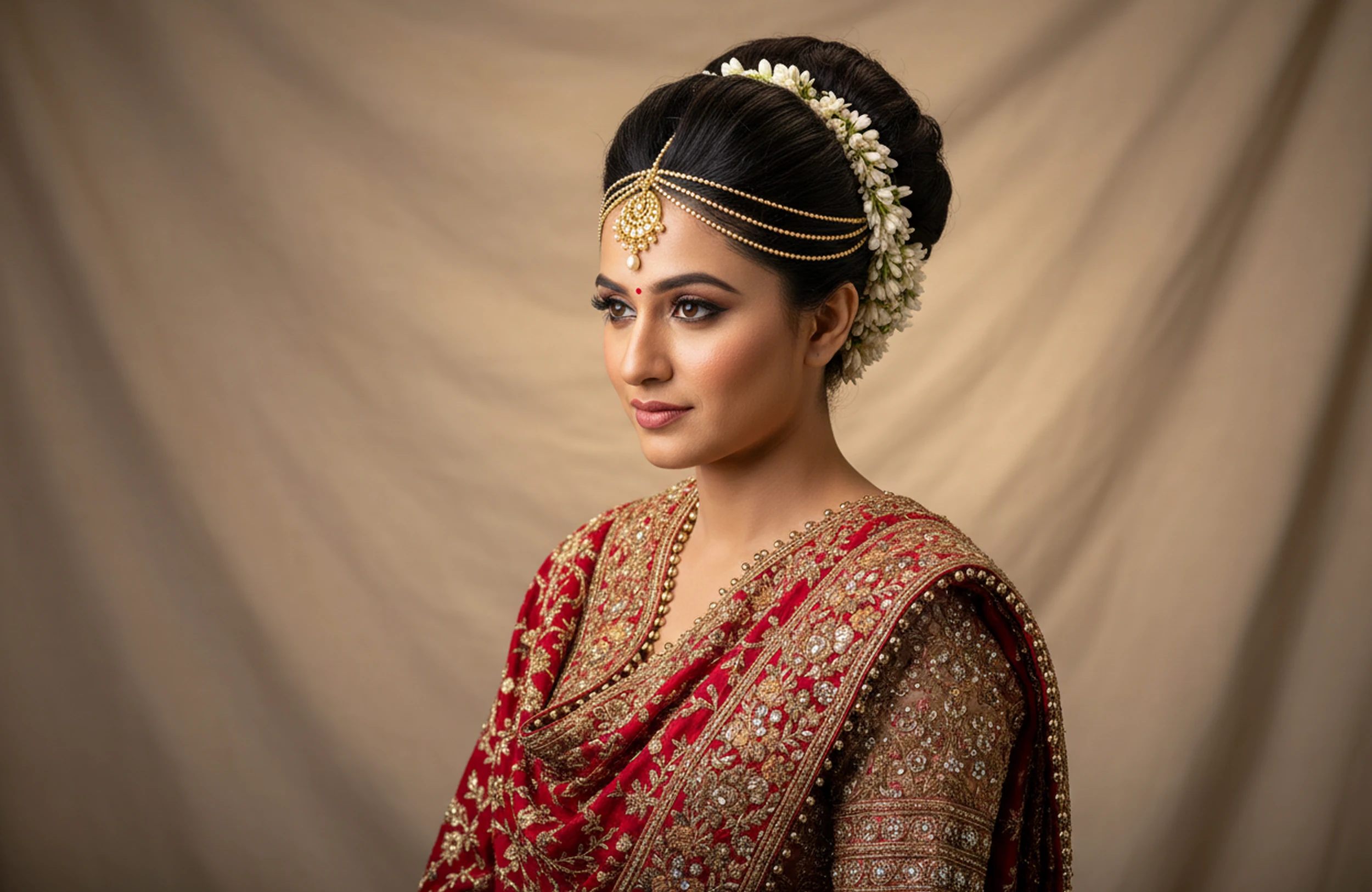
Wedding-day skin and hair is built over weeks, not overnight. The most common mistake brides make is leaving prep too late — starting a new skincare routine the week before, getting a colour treatment ten days out, trying a new serum that causes a reaction four days before the ceremony.
The month before your wedding is not the time to experiment. It’s the time to be consistent with what’s already working and to give your skin and hair the best possible foundation for the day. Your artist can only work with what they’re given — the better the canvas, the better the result.
This isn’t about elaborate routines or expensive products. It’s about discipline and timing — doing the right things at the right point in the lead-up and, just as importantly, knowing what to stop doing and when.
The Glam Mafia works across every South Asian wedding event — mehndi, sangeet, ceremony and reception — for brides and bridal parties across Toronto, Brampton, Vaughan, Markham, Mississauga and the wider GTA. We’re mobile and on-location: we come to your venue with a full team, a complete kit and a schedule that’s been built around your specific timeline before we arrive. There are no open questions on the morning itself — just execution. If you have your dates confirmed, start the conversation now. Peak season books early and we don’t overbook.